
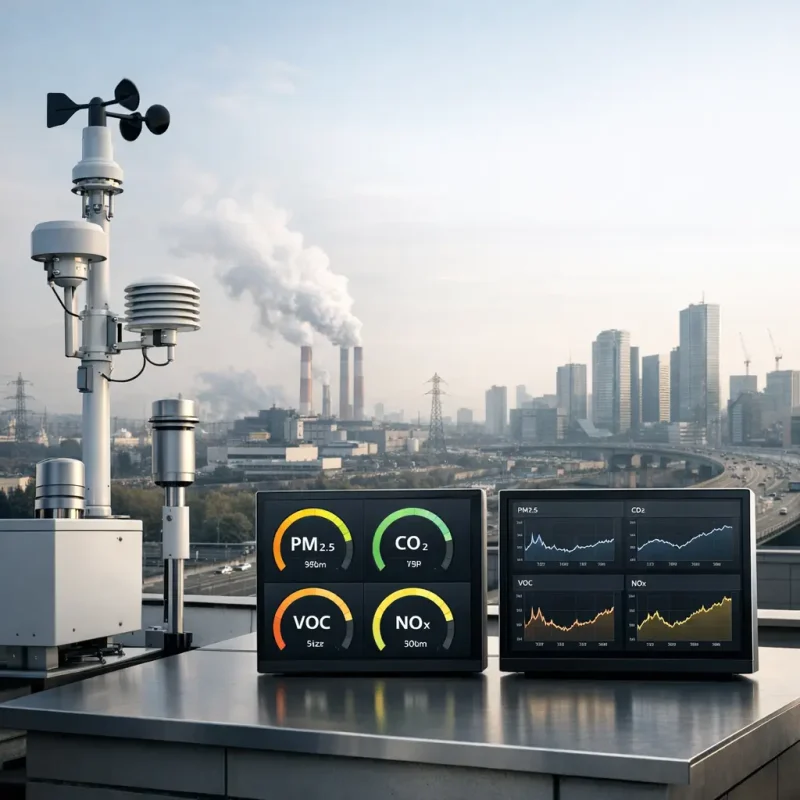
Clean air is essential for human health, productivity, and long-term environmental sustainability. Air quality monitoring enables organizations to continuously detect harmful pollutants, control emissions, and protect workers from exposure to hazardous airborne substances. By providing real-time data, it supports informed decision-making, helping industries prevent health risks, reduce environmental impact, and comply with regulatory standards.
From industrial plants and warehouses to commercial buildings and smart cities, continuous air monitoring allows organizations to shift from reactive damage control to proactive risk management. It also supports urban planning, public health initiatives, and sustainability programs by identifying pollution hotspots and guiding targeted interventions.
For readers new to the broader concept, see: What Is Environmental Monitoring? Purpose, Importance & Benefits, which provides helpful background before exploring air-specific monitoring in depth.
Looking to implement an Environmental Monitoring Solution?
What Is Air Quality Monitoring?
Air quality monitoring is the continuous measurement of air pollutants and environmental conditions using sensors and data systems to assess safety, detect hazards, and support compliance with health and environmental standards.
Why Air Monitoring Matters for Businesses
Air pollution does not only harm the environment—it directly affects employee health, workplace productivity, legal compliance, corporate reputation, and overall operational efficiency. Air quality monitoring helps businesses continuously track harmful pollutants, ensuring safer indoor and outdoor working conditions. Poor air quality increases sick leave, reduces performance, and can trigger regulatory penalties or operational shutdowns in high-risk industries.
By implementing real-time monitoring, organizations can identify risks early, improve ventilation strategies, and demonstrate environmental responsibility to regulators and stakeholders. This proactive approach not only protects employees but also strengthens business continuity, cost control, and public trust—reinforcing why environmental monitoring is important for businesses in today’s sustainability-driven economy.
Key Parameters in Air Quality Monitoring
Particulate Matter (PM2.5 & PM10)
Particulate matter refers to tiny airborne particles that can penetrate deep into the lungs and even enter the bloodstream, posing serious health risks over time. Air quality monitoring is essential for tracking these pollutants in real time and protecting public and occupational health.
PM2.5 consists of extremely fine particles from combustion, vehicles, and industrial emissions that are especially harmful to cardiovascular and respiratory systems. PM10 includes larger dust, smoke, and construction-related particles that irritate the airways and reduce visibility.
Industries, heavy traffic corridors, power plants, and construction sites are major sources of particulate pollution. Continuous monitoring helps authorities and businesses align control measures with the WHO Air Quality Guidelines, reducing exposure and improving overall air quality.
Carbon Dioxide (CO₂)
High CO₂ levels are a strong indicator of poor ventilation, overcrowding, and reduced oxygen availability in enclosed spaces. Air quality monitoring helps organizations continuously track carbon dioxide concentrations and maintain healthier indoor environments.
Elevated CO₂ can cause drowsiness, reduced concentration, headaches, and lower productivity, making it a critical parameter in workplaces and learning environments. It is commonly monitored in offices, conference rooms, schools, laboratories, and industrial enclosures where air circulation may be limited.
Real-time monitoring enables facility managers to optimize ventilation systems, adjust occupancy levels, and improve fresh air intake, ensuring safer, more comfortable, and more productive indoor conditions while reducing long-term health risks.
Carbon Monoxide (CO)
Carbon monoxide (CO) is a colorless, odorless, and potentially deadly gas produced by incomplete combustion from engines, furnaces, and industrial burners. Because it cannot be detected by human senses, air quality monitoring is essential for continuous safety protection in high-risk environments.
Monitoring is particularly critical in power plants, boiler rooms, manufacturing facilities, refineries, and warehouses where fuel combustion is common. Elevated CO exposure can cause dizziness, nausea, confusion, and in extreme cases, fatal poisoning. Real-time air quality monitoring enables early detection, automatic ventilation control, and emergency shutdowns, helping organizations protect workers, prevent accidents, and maintain safe operational conditions.
Volatile Organic Compounds (VOCs)
Volatile organic compounds (VOCs) are released from common sources such as paints, adhesives, cleaning chemicals, industrial solvents, and various manufacturing processes. These airborne chemicals can accumulate indoors, especially in poorly ventilated spaces, increasing health risks for workers and occupants. Long-term exposure to VOCs has been linked to respiratory issues, headaches, eye irritation, and in some cases, more serious chronic conditions.
Air quality monitoring plays a crucial role in detecting VOC concentrations in real time, helping organizations maintain safer indoor environments and reduce harmful exposure. Through structured environmental pollution monitoring, businesses can identify emission sources, implement control measures, and ensure compliance with health and safety standards while improving overall air quality.
Nitrogen Oxides (NOx) & Sulfur Dioxide (SO₂)
These gases are mainly emitted from vehicles, power plants, industrial boilers, diesel generators, and large manufacturing facilities that rely on fuel combustion. In urban areas, heavy traffic and transportation networks are among the largest contributors, while in industrial zones, energy production and high-temperature processes significantly increase emissions. Once released into the atmosphere, these pollutants react with sunlight and other chemicals to form smog, reducing visibility and worsening air quality. They also contribute to acid rain, which damages crops, forests, water bodies, and buildings.
Continuous air quality monitoring is therefore essential for tracking these emissions in real time, identifying pollution hotspots, and enabling authorities and industries to implement effective emission control measures that protect both human health and the environment.
Tools for Air Quality Monitoring
Fixed Air Monitoring Stations
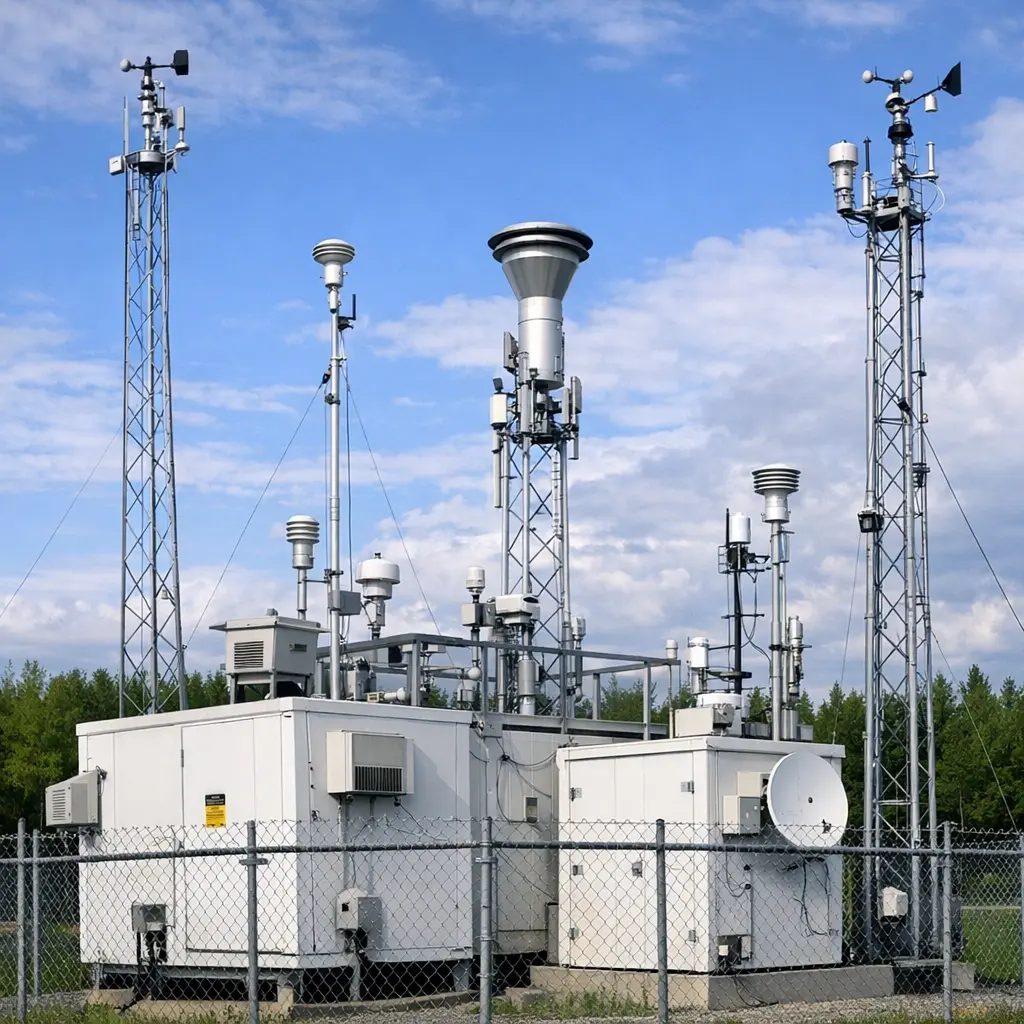
Fixed air monitoring stations are strategically placed at key urban, industrial, and residential locations to continuously track pollution levels over long periods. Governments use them to assess national air quality trends, while municipal authorities rely on the data for city planning and public health protection.
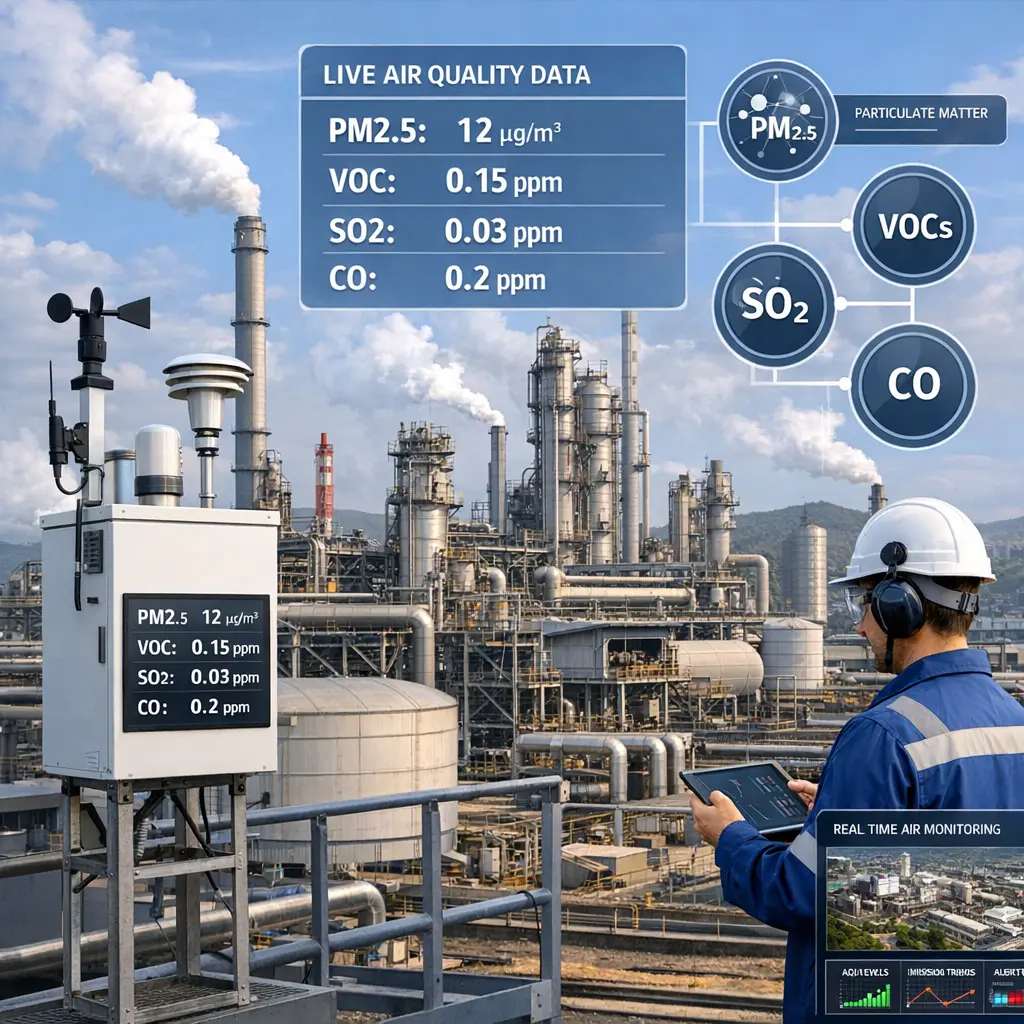
Large industries install these stations near factories to monitor emissions, demonstrate regulatory compliance, and reduce environmental impact. Equipped with advanced sensors and automated data transmission, these systems measure multiple pollutants with high precision and consistency. Their long-term datasets help identify seasonal patterns, pollution sources, and climate impacts.
By integrating fixed networks with digital dashboards, organizations can strengthen air quality monitoring, support evidence-based policies, and take timely actions to safeguard communities and ecosystems.
Portable Air Quality Sensors
Portable air quality sensors provide flexible, real-time air quality monitoring in locations where permanent stations are not practical. These lightweight devices enable environmental teams to conduct on-site inspections, verify pollution levels during field surveys, and track air conditions for short-term projects. They are especially valuable at construction sites where dust and emissions fluctuate daily, as well as during industrial audits that require rapid measurements. Health and safety officers also use them for workplace safety checks in factories, warehouses, and confined spaces. Many portable sensors connect to mobile apps or cloud platforms, allowing instant data analysis and reporting. For a deeper understanding of tools used in this field, see Environmental Monitoring Devices & Equipment: A Complete Guide
IoT-Based Real-Time Air Monitoring
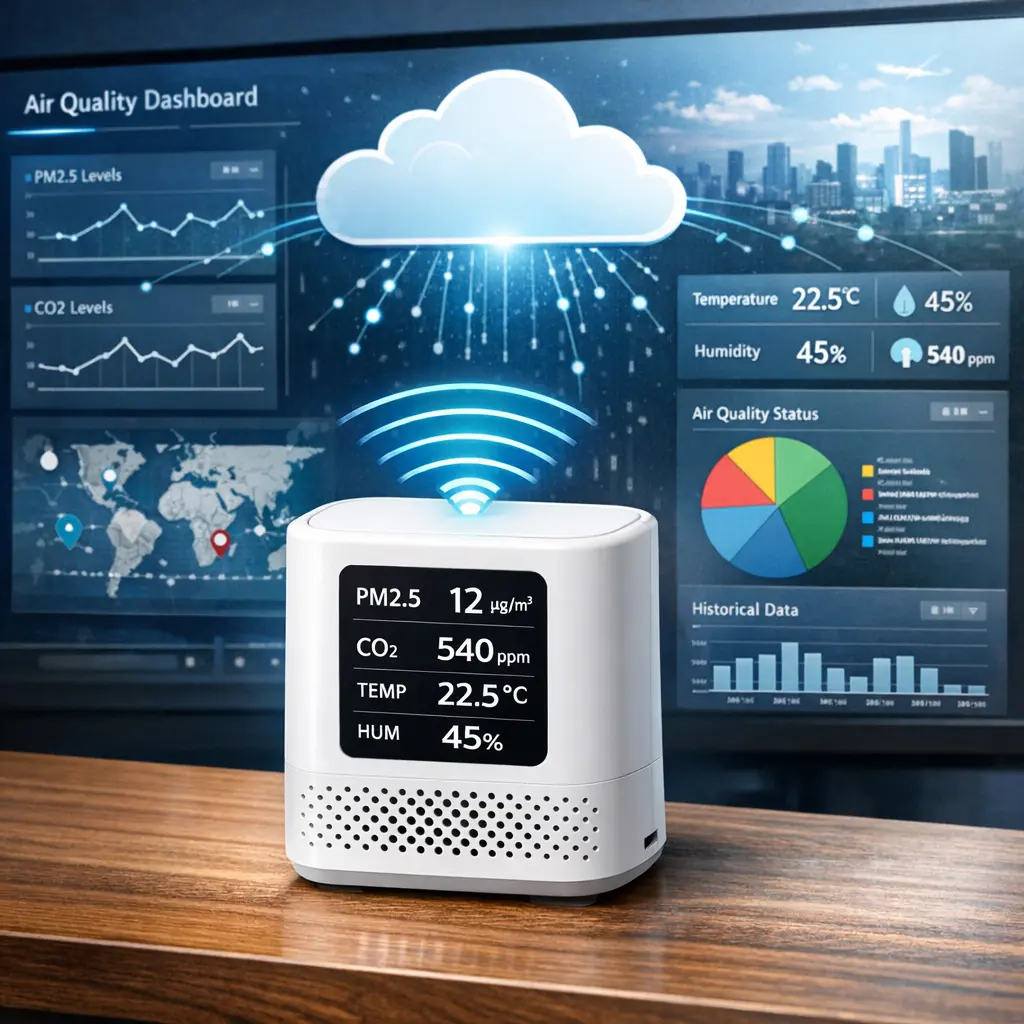
IoT-based systems are transforming air quality monitoring by enabling continuous, data-driven environmental oversight without manual sampling. Connected sensors collect pollution, temperature, humidity, and gas data around the clock, transmitting it to cloud platforms where it is analyzed in real time. Automated alerts notify facility managers when air quality exceeds safe limits, allowing rapid intervention before risks escalate. Remote access dashboards let teams monitor conditions from anywhere, improving operational efficiency and compliance. In smart buildings, these systems optimize ventilation and energy use, while in factories they help control emissions and protect worker health. To learn more about this approach, explore IoT Environmental Monitoring for Real-Time Data Collection.
Air Quality Monitoring in Different Environments
Industrial Air Monitoring
Industrial air monitoring plays a critical role in modern environmental management, especially through systematic air quality monitoring programs that operate continuously rather than as occasional checks. By using advanced sensors, stack monitoring systems, and workplace air sampling, industries can track harmful pollutants in real time and take corrective action before they pose health or regulatory risks. This helps facilities lower emissions, safeguard employee well-being, and maintain safe working environments. Reliable monitoring data also supports transparent reporting, strengthens audits, and ensures alignment with national and international regulations. For a detailed framework on regulatory obligations and reporting, see Environmental Compliance Monitoring: Standards, Reporting & Audits, which explains how monitoring supports lawful and sustainable operations.
Indoor Air Monitoring (Offices & Buildings)
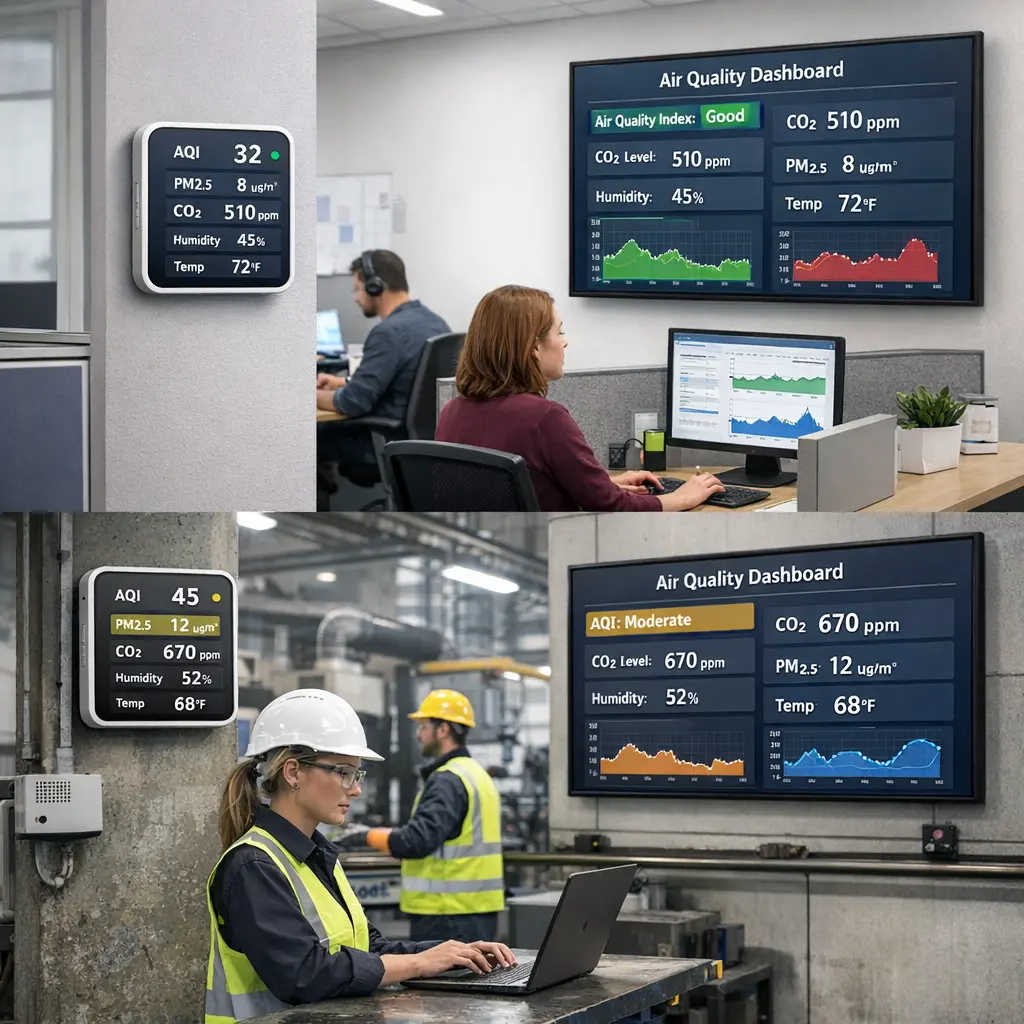
Indoor air monitoring is a key component of modern Air quality monitoring, as people spend a large portion of their time inside buildings where pollutants can accumulate unnoticed. By continuously measuring parameters such as carbon dioxide, particulate matter, humidity, and volatile organic compounds, organizations can maintain healthier indoor environments that support employee well-being and efficiency. Improved ventilation, timely maintenance of HVAC systems, and data-driven adjustments reduce fatigue, headaches, and respiratory issues, leading to better concentration and lower absenteeism. This is particularly critical in offices, hospitals, schools, and shopping malls, where high occupancy levels increase pollution risks and make proactive monitoring essential for safety, comfort, and regulatory compliance.
Urban Air Monitoring (Smart Cities)
Urban air monitoring has become a core element of smart city planning and modern Air quality monitoring strategies. Cities deploy dense networks of sensors, roadside monitoring stations, and data platforms to understand pollution hotspots in real time and design cleaner mobility systems. By analyzing traffic patterns, public transport usage, and industrial emissions together, municipalities can introduce low-emission zones, promote electric vehicles, and optimize traffic flow to cut smog levels. These efforts directly improve public health by reducing respiratory illnesses while also strengthening climate action plans and resilience to heat and pollution events. Such initiatives align with the UN Sustainable Development Goals, particularly those related to sustainable cities, clean air, and climate protection.
Best Practices for Air Quality Monitoring
Choose the Right Sensors
Choosing the right sensors is one of the most critical steps in effective Air quality monitoring. Different industries generate different pollutants, so sensor selection should align with the specific emission profile, risk level, and operational environment. High-risk facilities such as factories or power plants may require multi-gas analyzers, while offices may only need CO₂, VOC, and particulate sensors. Regulatory requirements also play a major role, as compliance standards often dictate accuracy, calibration frequency, and reporting capabilities. Additionally, organizations must decide between indoor and outdoor monitoring solutions, since environmental conditions and pollutant behavior vary significantly. To make informed decisions, businesses should review Environmental Monitoring Sensors & Biosensors Explained, which outlines sensor types, capabilities, and best use cases for reliable air quality management.
Ensure Proper Sensor Placement
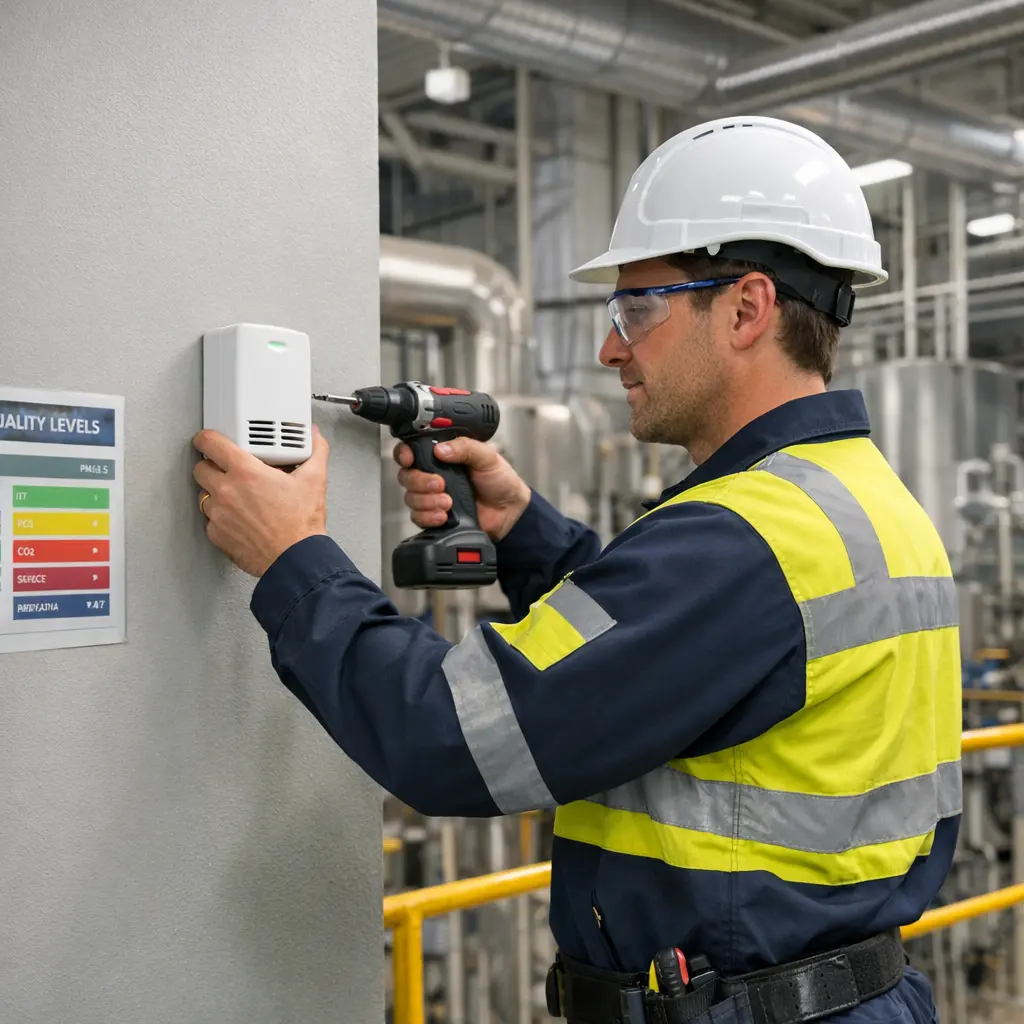
Proper sensor placement is essential for reliable Air quality monitoring and meaningful pollution data. Sensors should be installed in areas where contamination is most likely to occur, such as near emission sources, production lines, loading zones, or high-traffic zones. They should also be positioned where workers spend most of their time to accurately assess exposure risks and support occupational health and safety measures. Locations with weak ventilation, confined spaces, or stagnant airflow require special attention because pollutants tend to accumulate there. Installing sensors too high, too close to walls, or far from activity zones can distort readings and create false confidence. A strategic placement plan ensures accurate detection, better decision-making, and more effective pollution control.
Use Real-Time Alerts
Automated alerts are a critical component of effective Air quality monitoring, ensuring that potential risks are addressed before they escalate into health or environmental hazards. Systems should be configured to trigger real-time notifications when CO₂ concentrations exceed safe limits, when toxic gases such as carbon monoxide or methane are detected, or when sudden pollution spikes occur due to industrial activity or external events. These alerts can be sent via dashboards, email, or mobile notifications, enabling facility managers and safety teams to respond immediately. Rapid intervention may include increasing ventilation, shutting down equipment, or evacuating affected areas. When integrated with a centralized platform like Environmental Monitoring Systems: Components, Functions, and Benefits, organizations gain better control, transparency, and compliance.
Regular Calibration and Maintenance
Regular calibration and maintenance are essential to ensure reliable Air quality monitoring over time. Sensors exposed to dust, humidity, temperature fluctuations, and chemical contaminants can drift from their original accuracy, leading to misleading data. Routine calibration against certified reference instruments helps maintain measurement precision, reduce false alarms, and ensure consistency across monitoring sites. Preventive maintenance—such as cleaning sensor components, replacing filters, checking power supplies, and updating firmware—further extends equipment lifespan and performance. Well-maintained systems also support regulatory compliance, as many environmental audits require documented calibration records. By treating calibration as a continuous process rather than a one-time task, organizations can trust their air data and make better environmental and safety decisions.
Air Quality Monitoring and Compliance
Meeting Legal Standards
Businesses must comply with national and international air quality laws to avoid penalties, operational shutdowns, and reputational damage. Effective Air quality monitoring helps organizations track emissions, document pollutant levels, and demonstrate compliance with regulatory thresholds. Environmental authorities such as the EPA Laws & Regulations framework require accurate reporting, routine assessments, and proper record-keeping. Companies must maintain structured documentation, conduct periodic audits, and generate transparent compliance reports. For guidance on preparing accurate documentation, see Environmental Monitoring Report: What to Include and Why It Matters. Proactive monitoring not only ensures legal compliance but also strengthens corporate responsibility and long-term sustainability efforts.
Reporting and Documentation
Accurate data collected through Air quality monitoring plays a crucial role in maintaining transparent and reliable documentation. Detailed air quality records support environmental audits, government inspections, and internal compliance reviews. Regulatory bodies often require proof of emission levels, calibration logs, and incident reports, making proper record-keeping essential. In addition, verified pollution data strengthens sustainability and ESG disclosures, helping organizations align with global frameworks such as the Global Reporting Initiative (GRI). Well-structured reporting demonstrates accountability, builds stakeholder confidence, and ensures businesses can quickly respond to regulatory inquiries while showcasing their commitment to environmental responsibility and sustainable operations.
Benefits of Air Quality Monitoring for Businesses
Protects Employee Health
Clean air is essential for maintaining a safe and productive workplace. Effective Air quality monitoring helps organizations identify harmful pollutants before they impact employee health. Poor indoor air can lead to respiratory diseases, frequent headaches, fatigue, and increased sick leave, all of which reduce overall performance and morale. By continuously tracking air conditions, businesses can improve ventilation, control emissions, and address contamination sources promptly. Proactive monitoring not only safeguards worker well-being but also supports compliance and sustainability goals, as outlined in the guide on Benefits of Environmental Monitoring for Safety and Sustainability.
Reduces Legal Risks
Air pollution regulations are becoming stricter across industries, making compliance a top priority for organizations. Effective Air quality monitoring helps businesses identify regulatory violations before they escalate into serious legal consequences. By continuously tracking emission levels and indoor air conditions, companies can avoid costly fines, prevent forced shutdowns, and demonstrate adherence to environmental standards. Real-time data also provides documented proof of compliance during inspections and audits. Instead of reacting to penalties after violations occur, proactive monitoring enables organizations to address risks early, maintain operational continuity, and build a reputation for responsible environmental management.
Improves Brand Reputation
Organizations that prioritize environmental responsibility are increasingly recognized as industry leaders. By implementing effective Air quality monitoring programs, companies demonstrate their commitment to protecting employee health, surrounding communities, and the environment. Transparent reporting of air data builds public trust and reassures stakeholders that operations are conducted responsibly. Investors are more likely to support businesses that actively manage environmental risks and align with sustainability goals. Strong air management policies also enhance corporate image, helping brands differentiate themselves in competitive markets. Over time, consistent monitoring and responsible practices contribute to long-term credibility, customer loyalty, and sustainable business growth.
Technology Driving Air Quality Monitoring
Smart Sensors and AI Analytics
Modern environmental technologies combine smart sensors with artificial intelligence to enhance Air quality monitoring capabilities. Machine learning algorithms analyze large volumes of historical and real-time data to identify patterns, detect anomalies, and predict potential pollution events before they escalate. Predictive analytics enables organizations to forecast emission spikes, ventilation failures, or hazardous gas buildup, allowing preventive maintenance and operational adjustments. Trend forecasting also supports long-term planning by highlighting seasonal variations and recurring risk factors. By integrating AI-driven insights with sensor networks, businesses can move from reactive responses to proactive environmental management, improving safety, compliance, and overall operational efficiency.
Centralized Dashboards
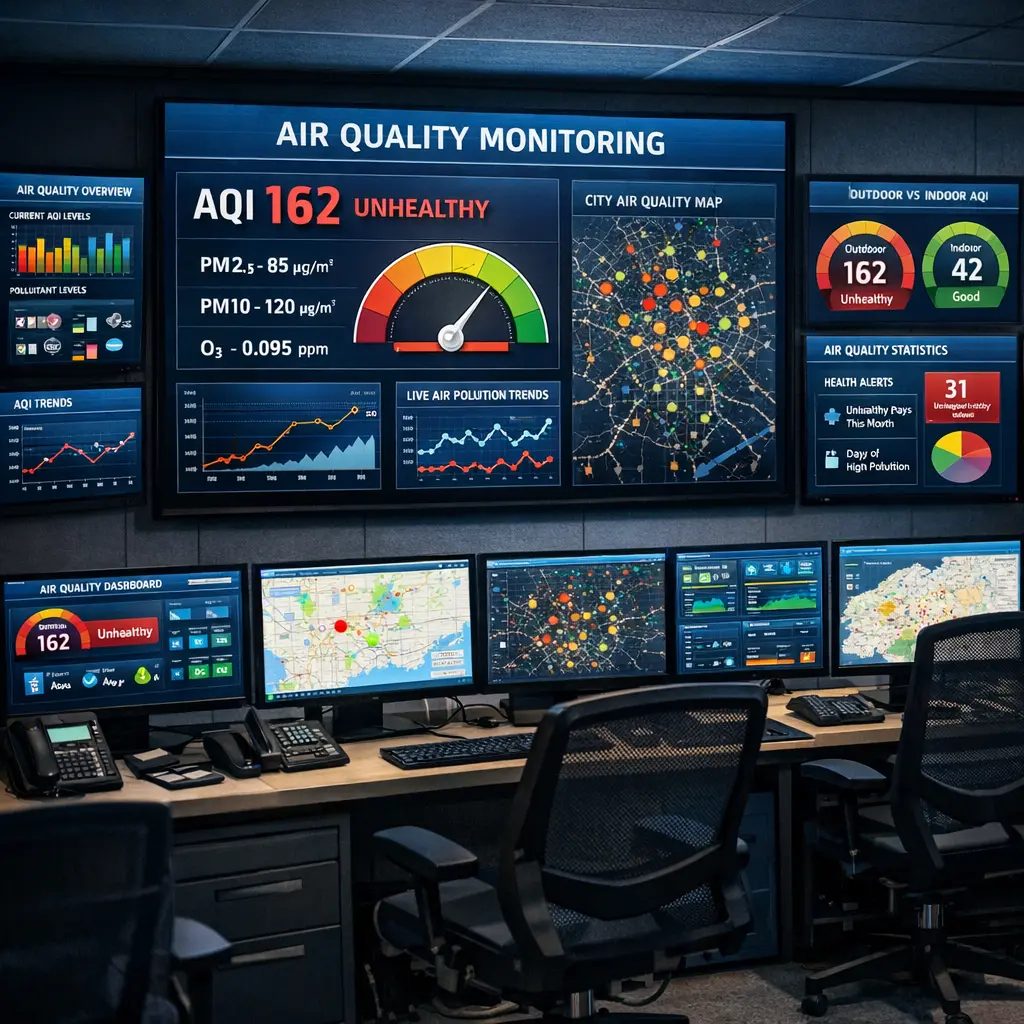
Centralized dashboards bring all Air quality monitoring data into a single, user-friendly platform. This enables organizations to manage multi-site monitoring efficiently, whether across factories, offices, or remote facilities. Real-time visualizations display pollutant levels, historical trends, and performance benchmarks, helping decision-makers quickly assess environmental conditions. Automated reporting features simplify compliance documentation by generating ready-to-submit reports aligned with regulatory standards. Compliance tracking tools also flag exceedances and maintain audit-ready records. By consolidating environmental data into one system, businesses improve visibility, streamline operations, and ensure faster responses to potential air quality issues across all monitored locations.
Choosing the Right Air Monitoring Solution
Industry-Specific Needs
Different industries require tailored solutions to ensure effective Air quality monitoring based on their specific risks and operational environments. In manufacturing facilities, advanced gas sensors are essential for detecting hazardous emissions and protecting workers from toxic exposure. Construction sites rely heavily on dust and particulate monitors to control airborne particles generated by excavation and material handling. Offices and commercial buildings typically focus on CO₂ and VOC sensors to maintain proper ventilation and healthy indoor environments. By selecting industry-specific tools, organizations can improve safety, maintain compliance, and ensure accurate monitoring aligned with their operational needs.
Looking to implement an Environmental Monitoring Solution?
Conclusion
Air quality monitoring is essential for protecting health, ensuring compliance, and supporting sustainability. With modern sensors, IoT platforms, and centralized analytics, businesses can maintain safe environments while reducing environmental impact.
