
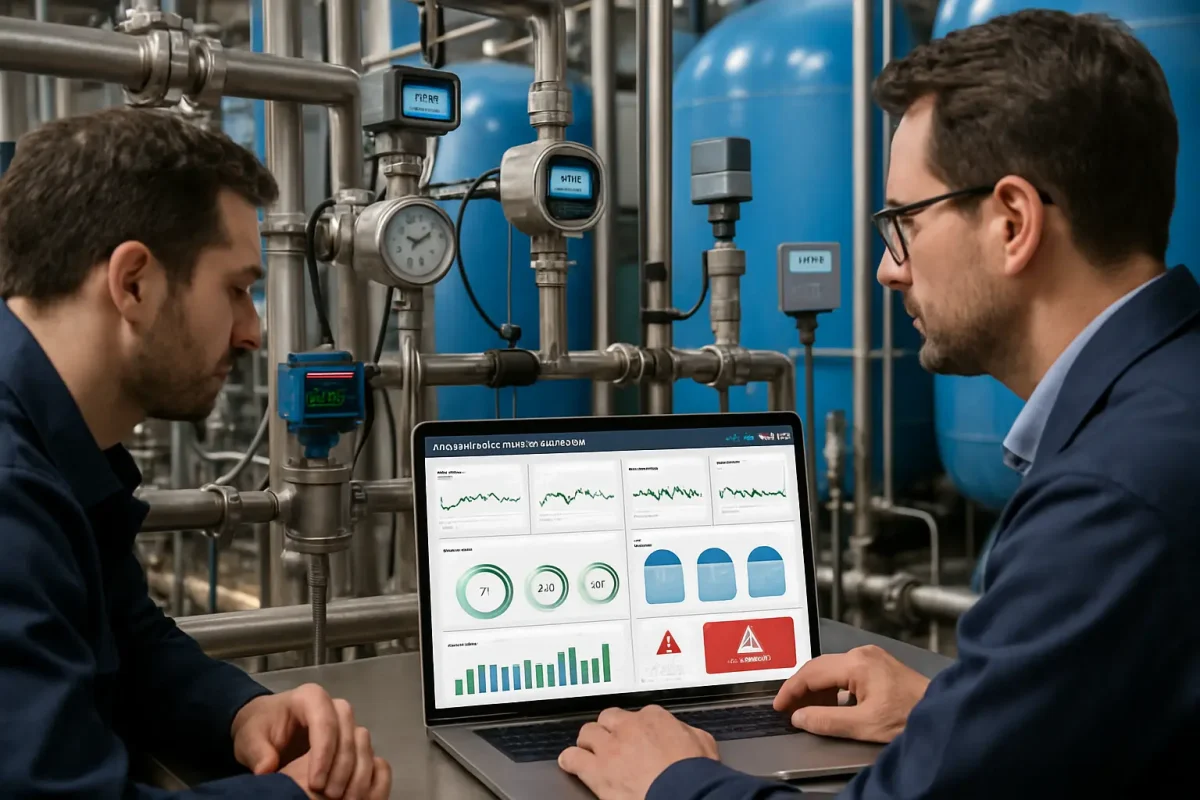
What Is an IoT Based Smart Water Management System?
- Flowmeters
- Pressure transducers
- Sensors for tank level
- Water quality analysers
- Power-meters
- Sensors for leak detection
- Devices for pump monitoring
- Sensors for the environment
- Internet Wi-Fi
- Ethernet
- Cellular 4G/5G
- LoRaWAN
- Narrow Band IoT (NBIoT)
- Modbus Networks RS485
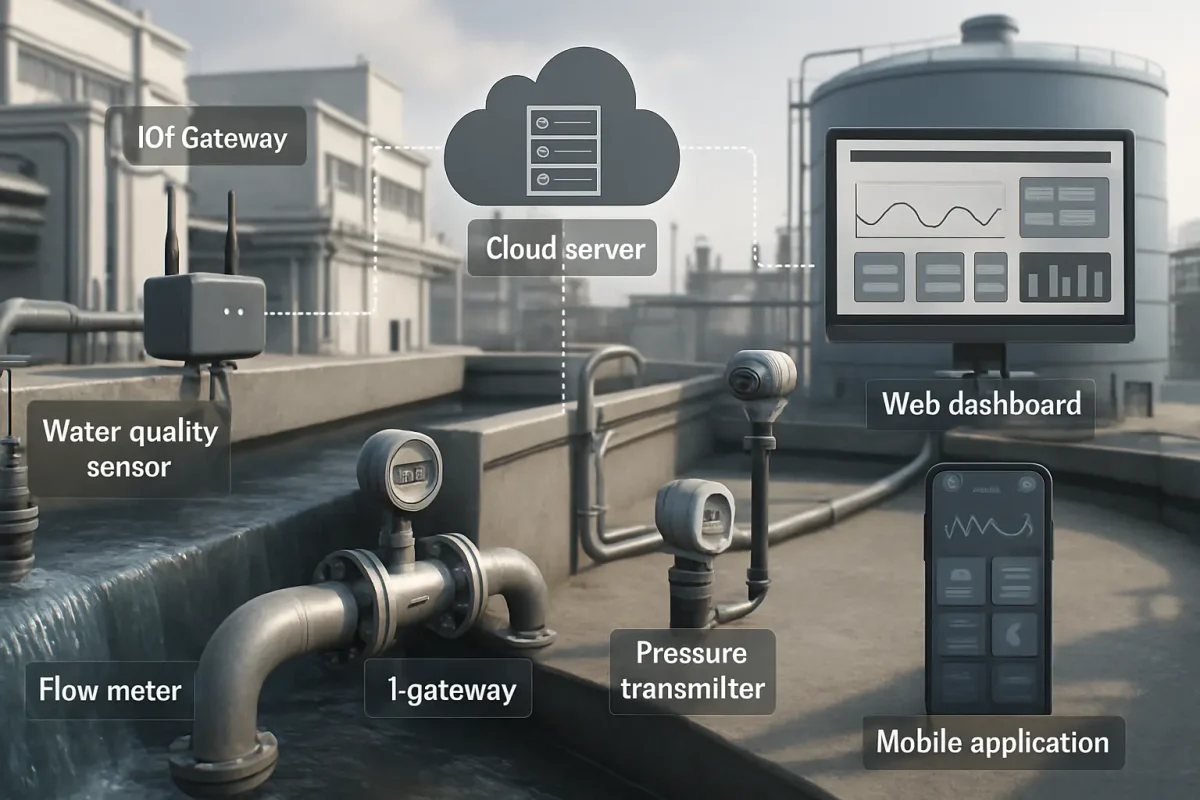
Key Components of an IoT Based Smart Water Management System
A deployment is successful when several integrated components work together.
Smart Sensors
The system relies on sensors, which collect operational data in real time.
The typical sensors are:
- pH sensors
- Conductivity sensors
- Turbidity sensors
- Chlorine analyzers
- Dissolved oxygen sensors
- Flow meters
- Pressure sensors
- Ultrasonic level sensors
Many organisations use dedicated Smart Sensors for Real-Time Water Quality Monitoring to enhance the accuracy of measurements and reduce the need for manual intervention.
IoT Gateway
The gateway is the communication bridge between field devices and the cloud platforms.
Its main functions are:
- Data acquisition
- Protocol conversion
- Edge processing
- Secure data transmission
Communication Network
The sensor data are transmitted to the central servers by the communication layer using wireless or wired technologies.
Communication options include:
- Cellular networks
- WiFi
- Ethernet
- LoRaWAN
- Radio telemetry
Cloud Monitoring Platform
The cloud platform provides:
- Real-time dashboards
- Historical data storage
- Alarm notifications
- Trend analysis
- Report generation
Analytics Engine
Advanced analytics help identify:
- Water losses
- Consumption trends
- Equipment failures
- Abnormal operating conditions
- Predictive maintenance opportunities
How IoT Improves Water Quality Monitoring
Maintaining water quality is a critical requirement for drinking water utilities, industrial plants, treatment facilities, and commercial operations. Organizations responsible for public water supplies must often comply with internationally recognized standards published by the World Health Organization (WHO) regarding drinking water safety.
Traditional testing methods often rely on periodic sampling, which leaves gaps between measurements. Monitoring system based on IoT that continuously monitors the essential water quality parameters.
Common Water Quality Parameters
- pH
- ORP
- Conductivity
- TDS
- Turbidity
- Dissolved Oxygen
- Residual Chlorine
- Temperature
Deploying a IoT Water Quality Monitoring System gives organisations real-time visibility over these parameters allowing faster decision making and better operational control.
Modern Water Quality Monitoring Using IoT solutions can also automatically alert operators if measurements exceed acceptable levels.
Many facilities are replacing manual data collection and using a comprehensive Water Quality Monitoring System Using IoT that allows remote access to quality data through web and mobile dashboards.
These technologies support broader Drinking Water Quality Monitoring efforts and help utilities with potable water networks to become more responsive and to reduce risks of non-compliance.
Benefits of IoT Water Quality Monitoring
- Continuous monitoring
- Faster contamination detection
- Reduced manual testing
- Automated reporting
- Improved regulatory compliance
- Better operational visibility
Real-Time Monitoring of Water Distribution Networks
Water distribution networks are subject to pressure fluctuations, leaks, unauthorised consumption, and failures of infrastructure.
IoT technology enables utilities to monitor network performance in real time.
Parameters Monitored
- Flow rates
- Line pressure
- Tank levels
- Consumption patterns
- Pump status
- Valve operation
Operators are able to quickly identify abnormal conditions before they become major operational issues with real-time monitoring.
Being able to see the whole distribution system from one central dashboard is a huge boost to operational efficiency and response times.
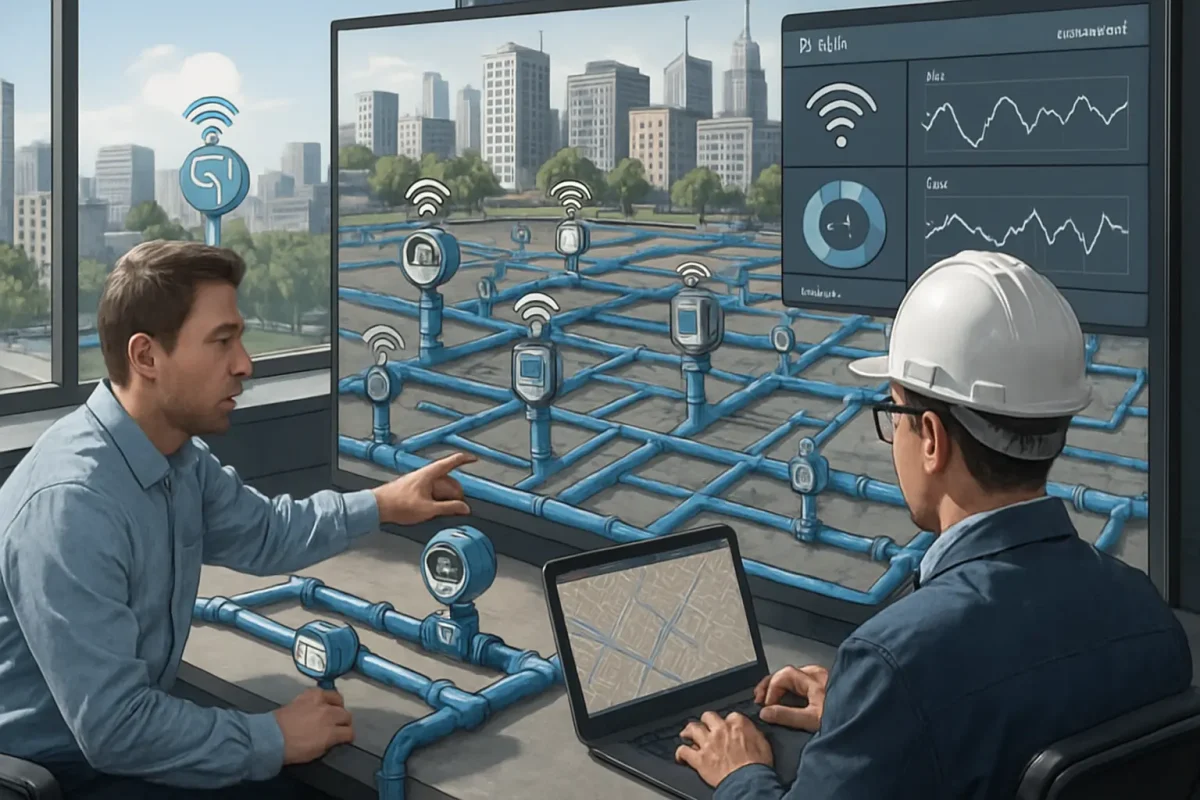
IoT-Based Leak Detection and Water Loss Reduction
Water loss remains one of the greatest challenges facing utilities worldwide.
According to the International Water Association (IWA), reducing non-revenue water through improved monitoring and leak detection remains a key priority for utilities globally.
Not only do leaks waste valuable resources, they also increase operating costs and damage infrastructure.
An IoT Based Smart Water Management System monitors continuously:
- Flow patterns
- Pressure variations
- Consumption trends
- Network performance indicators
The system can create alerts automatically when abnormalities are found.
To get better visibility into hidden pipeline leaks, organisations often incorporate dedicated Water Leakage Detection Systems.
The more Pipeline Leakage Detection Systems for Water use a combination of flow monitoring and pressure analysis to better determine possible leak locations.
Today’s IoT-Based Water Leakage Detection solutions use real-time analytics and automated notifications to enhance performance even further.
Utilities implementation of Leakage Detection in Water Distribution Systems can lead to significant reductions in non-revenue water and infrastructure losses.
Benefits of IoT Leak Detection
- Reduced water losses
- Faster leak identification
- Lower repair costs
- Improved infrastructure reliability
- Better resource conservation
Cost Savings Through IoT Water Management
One of the strongest reasons to adopt IoT technology is to reduce operational costs.
Organisations typically realise savings through:
Reduced Water Waste
Continuous monitoring helps eliminate hidden losses.
Lower Maintenance Costs
Predictive maintenance reduces emergency repairs.
Reduced Field Visits
Remote monitoring minimizes manual inspections.
Lower Energy Consumption
Optimized pump operation improves efficiency.
Reduced Downtime
Early fault detection prevents major disruptions.
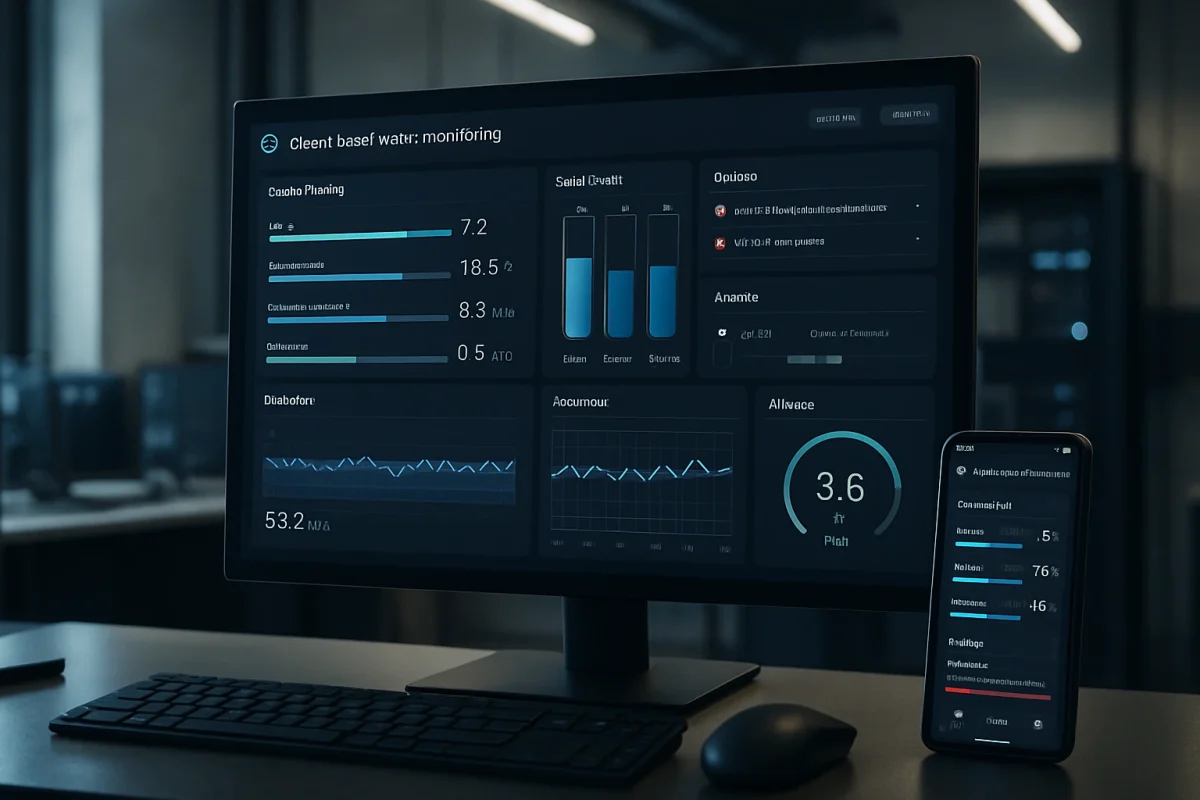
Remote Monitoring and Control
- Desktop computers
- Smartphones
- Tablets
- Control rooms
- Cloud-based dashboards
This allows water utilities and industrial facilities to monitor multiple sites simultaneously from one platform.
Remote Functions Include
- Viewing live sensor readings
- Monitoring alarms and alerts
- Tracking equipment status
- Generating reports
- Analyzing historical trends
- Managing distributed assets
Remote visibility enhances operational efficiency and decreases travel for organisations managing remote treatment facilities, pumping stations, reservoirs and distribution networks.
Predictive Maintenance and Asset Management
Equipment Commonly Monitored
- Water pumps
- Booster stations
- Motors
- Chemical dosing systems
- Valves
- Filtration systems
- RO plant equipment
By analyzing trends such as:
- Energy consumption
- Operating hours
- Flow performance
- Pressure fluctuations
- Motor runtime
Energy Optimization and Sustainability
- Pump efficiency
- Energy consumption
- Flow rates
- Pressure levels
- Runtime hours
Operators can compare asset performance and optimise their operating schedules to reduce energy waste.
The outcome is:
- Lower electricity bills
- Reduced carbon footprint
- Improved sustainability performance
- Better equipment utilization
These improvements support global objectives related to sustainable water management, promoted by UN-Water and the United Nations.
A lot of organisations consider IoT water monitoring a crucial component of broader environmental, social and governance (ESG) efforts.
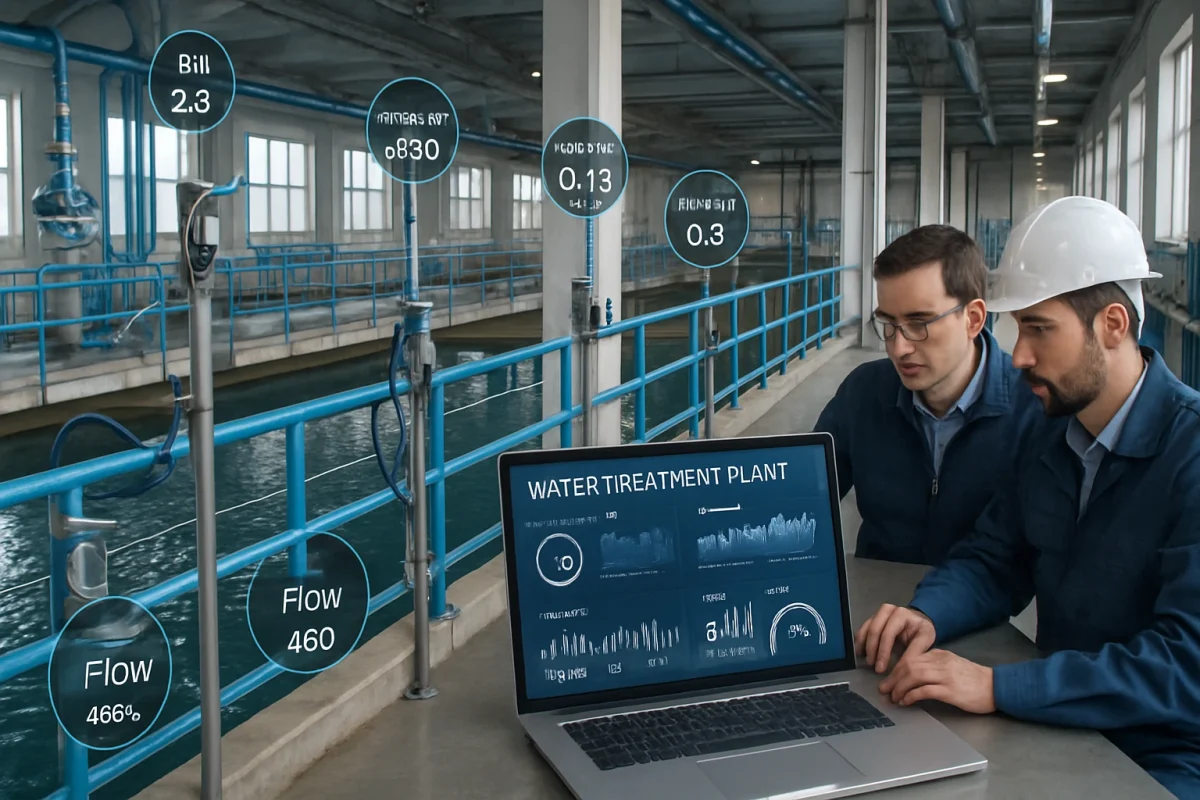
Applications in Water Treatment Plants
Parameters Commonly Monitored
- Raw water quality
- Treated water quality
- pH
- Conductivity
- Turbidity
- Residual chlorine
- Tank levels
- Flow rates
- Pump operation
- Chemical dosing systems
Smart City Water Management Applications
- Water distribution networks
- Storage reservoirs
- Pumping stations
- Public water supplies
- Water consumption patterns
- Leakage events
Regulatory Compliance and Reporting
Water utilities and industrial facilities must comply with strict environmental and public health regulations.
Maintaining accurate records is often a complex and time-consuming task.
IoT systems automate much of this process by:
- Recording measurements continuously
- Storing historical data securely
- Generating compliance reports
- Providing audit trails
- Documenting alarm events
Automated reporting reduces administrative workloads while improving data accuracy.
Organizations responsible for Drinking Water Quality Monitoring in Pakistan and Drinking Water Quality Monitoring in Islamabad can particularly benefit from automated compliance documentation and centralized reporting systems.
Return on Investment (ROI)
The financial benefits of implementing an IoT Based Smart Water Management System often extend beyond direct operational savings.
Many of these operational improvements are discussed in greater detail in our guide on Advantages of Smart Water Management System, where we examine how smart technologies reduce costs, improve efficiency, and strengthen resource management strategies.
Key ROI Drivers
- Reduced water losses
- Lower maintenance expenses
- Improved asset utilization
- Reduced labor costs
- Lower energy consumption
- Increased operational efficiency
- Better regulatory compliance
- Reduced downtime
Many organizations achieve measurable returns within a relatively short period due to the combined impact of operational improvements and resource optimization.
Future Trends in IoT Water Management
The future of water management will increasingly incorporate advanced technologies such as:
Artificial Intelligence (AI)
AI-powered analytics will improve predictive maintenance and operational optimization.
Digital Twins
Virtual replicas of water infrastructure will allow operators to simulate scenarios and improve planning.
Edge Computing
Data processing at the field level will reduce latency and improve response times.
Advanced Analytics
Machine learning algorithms will improve leak detection, forecasting, and decision-making.
Smart Infrastructure
Connected assets will continue to transform how utilities manage water resources.
These technologies will further strengthen the role of IoT in creating resilient, sustainable, and intelligent water management systems.
Frequently Asked Questions (FAQ)
An IoT Based Smart Water Management System uses connected sensors, communication networks, cloud software, and analytics platforms to monitor water infrastructure in real time.
Common parameters include pH, conductivity, turbidity, chlorine, dissolved oxygen, flow rate, pressure, tank levels, energy consumption, and equipment status.
IoT systems continuously analyze flow, pressure, and consumption data to detect leaks and abnormal operating conditions before major losses occur.
Yes. IoT solutions are widely used in water treatment facilities to monitor water quality, optimize treatment processes, manage equipment, and improve regulatory compliance.
Industries including municipal utilities, manufacturing, food processing, pharmaceuticals, commercial buildings, agriculture, and water treatment facilities can benefit from IoT water management solutions.
