
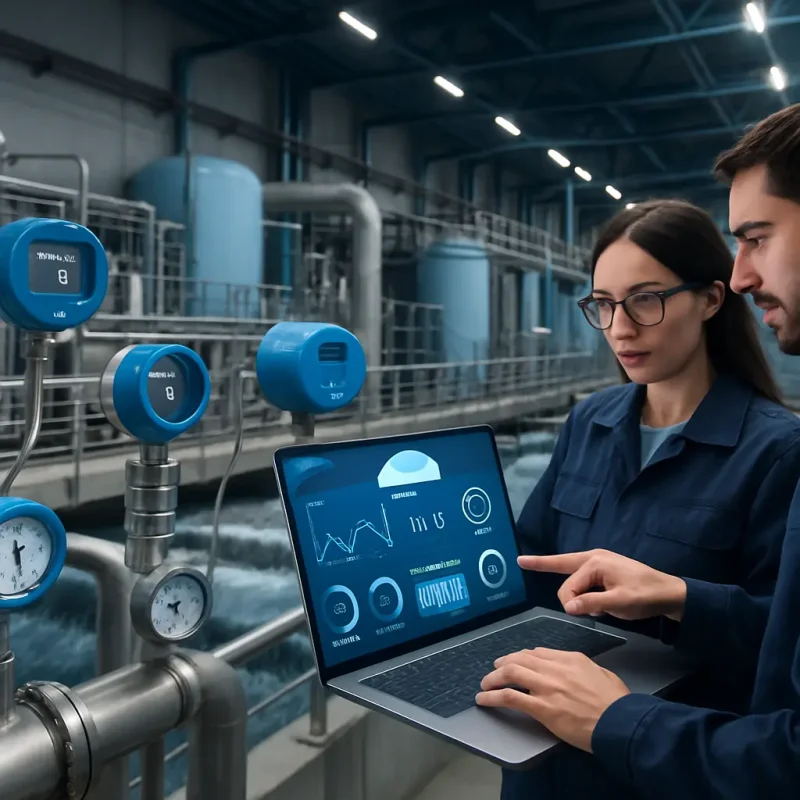
What Is a Smart Water Management System?
A Smart Water Management System is a comprehensive solution that leverages sensor networks, data acquisition devices, communication networks and cloud software to monitor water infrastructure in real time.
The system continuously collects information from:
- Flow meters
- Pressure transmitters
- Tank level sensors
- pH sensors
- Turbidity sensors
- Conductivity sensors
- Chlorine analyzers
- Energy meters
- Leak detection sensors
Real-Time Monitoring and Complete Visibility
Water Quality Parameters
- pH
- ORP
- Conductivity
- TDS
- Turbidity
- Dissolved Oxygen
- Residual Chlorine
Water Distribution Parameters
- Flow rate
- Pressure
- Tank levels
- Water consumption
Equipment Parameters
- Pump status
- Motor operation
- Energy consumption
- Equipment runtime
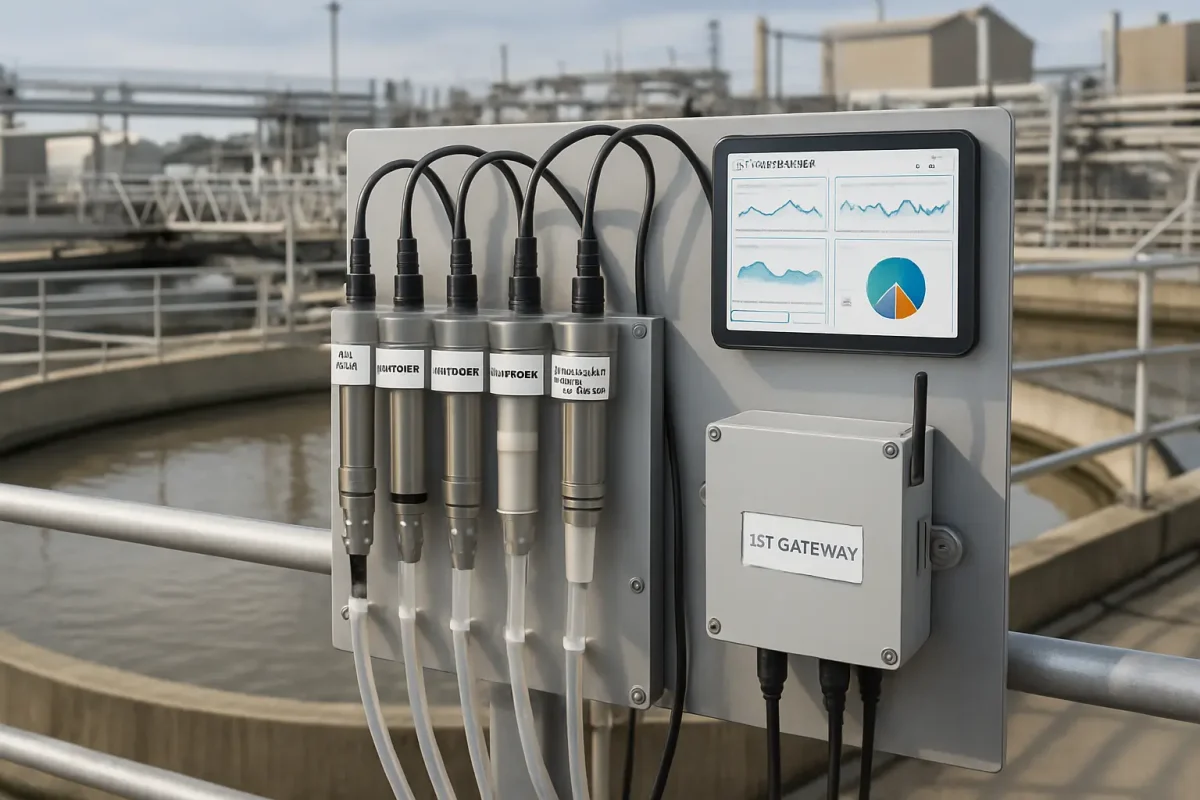
Improved Water Quality Management
Benefits of Continuous Water Quality Monitoring
- Early contamination detection
- Improved public safety
- Better compliance management
- Reduced laboratory testing costs
- Faster incident response
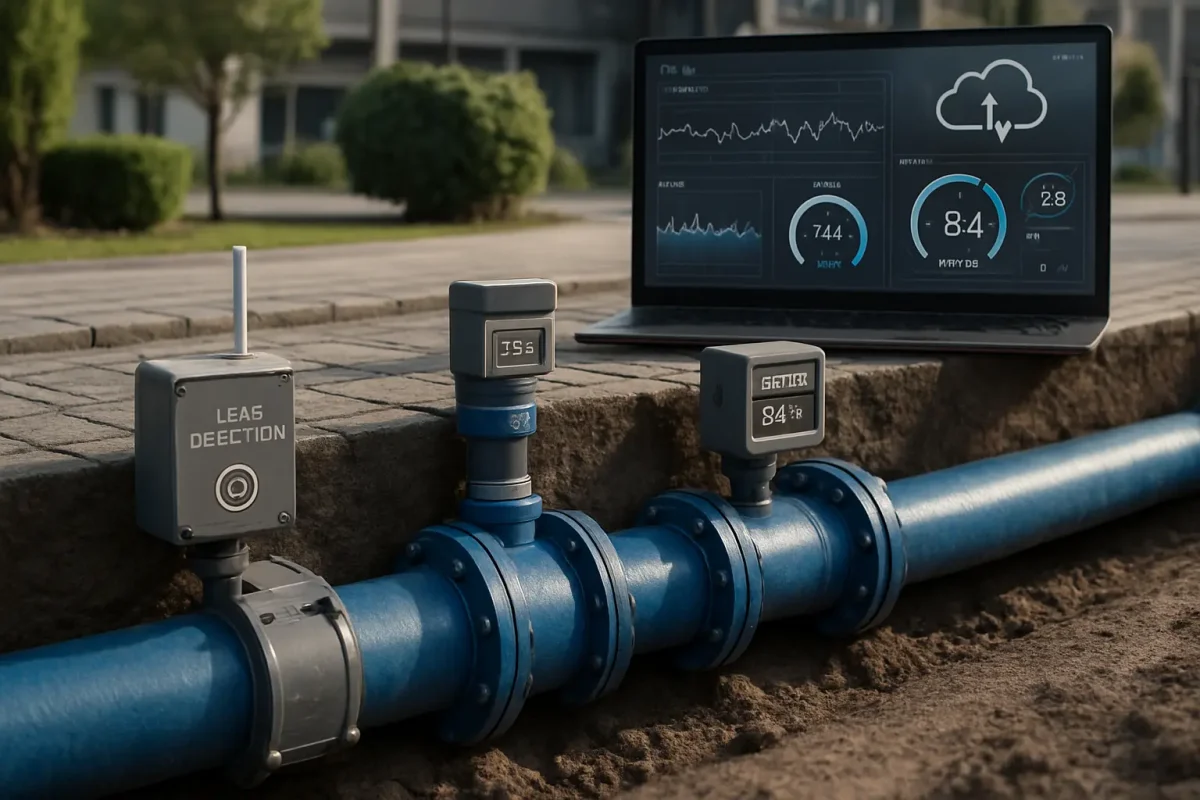
Early Leak Detection and Water Loss Reduction
- Flow analysis
- Pressure monitoring
- Consumption pattern analysis
- Automated alarm generation
Benefits of Leak Detection
- Reduced water losses
- Lower operating costs
- Improved infrastructure reliability
- Reduced maintenance expenses
- Better resource conservation
Significant Cost Saving
One of the strongest business cases for implementing a Smart Water Management System is cost reduction.
Organizations typically experience savings through:
Reduced Water Losses
Leak detection minimizes wastage and improves resource utilization.
Reduced Labor Costs
Remote monitoring reduces the need for manual inspections and field visits.
Reduced Maintenance Costs
Continuous monitoring identifies issues before major failures occur.
Lower Energy Costs
Optimized pump operation reduces electricity consumption.
Reduced Downtime
Faster fault detection improves operational continuity.
Better Asset Management and Predictive Maintenance
Water infrastructure consists of numerous critical assets, including pumps, motors, valves, pipelines, reservoirs, and treatment equipment. Unexpected equipment failures can disrupt operations, increase maintenance costs, and impact water quality.
A Smart Water Management System provides continuous visibility into asset performance, allowing operators to identify abnormal conditions before they lead to equipment failure.
Modern monitoring technologies support more effective water infrastructure management and maintenance planning.
Key parameters that can be monitored include:
- Pump runtime
- Motor current
- Energy consumption
- Pressure variations
- Flow performance
- Equipment operating hours
By analyzing trends and historical data, organizations can move from reactive maintenance to predictive maintenance strategies.
Facilities implementing Industrial Water Quality Monitoring Best Practices often combine asset monitoring with water quality analytics to improve overall operational reliability. In sectors with high water consumption, such as manufacturing and pulp processing, Water Pollution Monitoring in Paper Industry projects increasingly integrate predictive maintenance and environmental monitoring into a single platform.
Benefits include:
- Extended equipment lifespan
- Reduced maintenance costs
- Improved operational reliability
- Reduced unplanned downtime
- Better resource allocation
Remote Monitoring and Control
One of the most transformative advantages of modern water management systems is remote access.
Instead of relying on site visits, operators can monitor facilities from anywhere using web dashboards, smartphones, and cloud-based platforms.
Remote monitoring enables organizations to:
- View live operational data
- Receive alarm notifications instantly
- Analyze historical trends
- Generate reports automatically
- Monitor multiple sites from a central location
This capability is especially valuable for facilities operating across geographically dispersed locations.
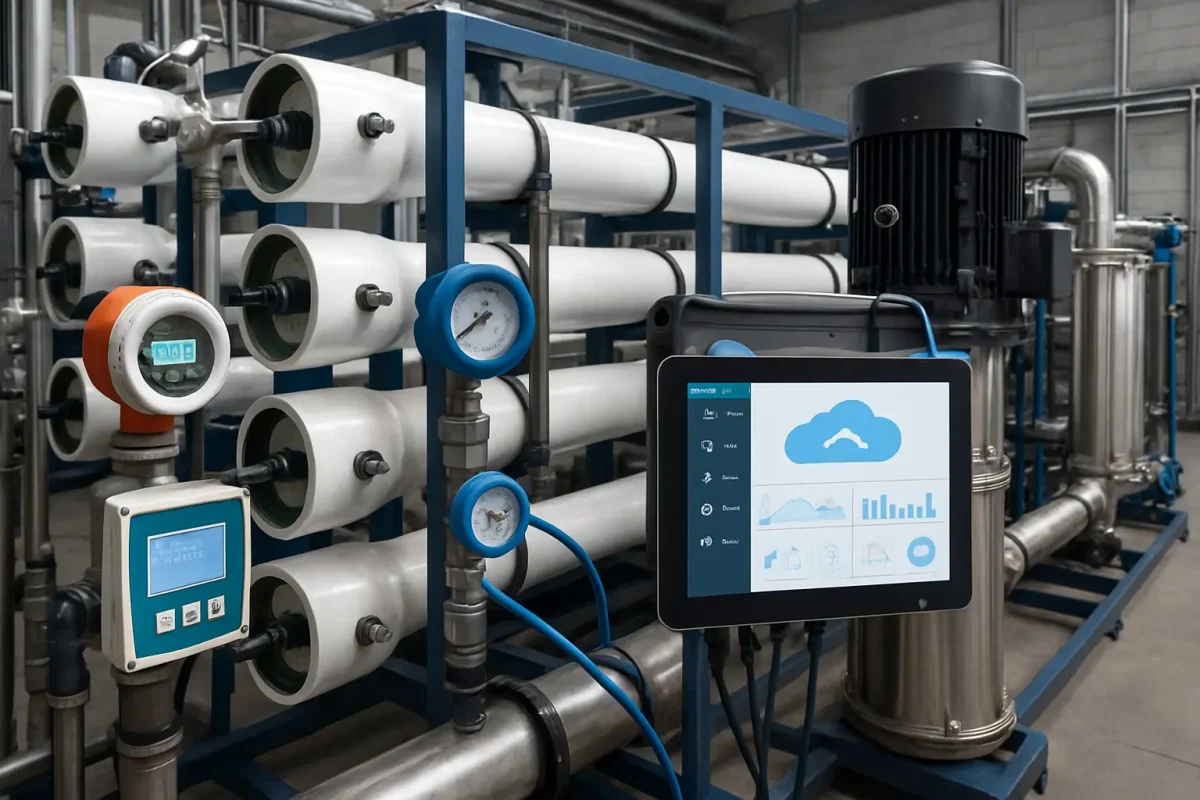
For example, organizations managing reverse osmosis systems increasingly deploy a RO Plant Monitoring System to remotely monitor membrane performance, flow rates, pressure levels, and water quality. A modern Remote Monitoring System for RO Plants reduces operational costs while improving plant efficiency.
Operators can also continuously evaluate Monitoring Product Water Quality in RO Plants, ensuring treated water consistently meets required quality standards.
Enhanced Energy Efficiency and Sustainability
Energy costs represent a significant portion of water treatment and distribution expenses.
Smart Water Management Systems help organizations optimize energy usage by monitoring:
- Pump efficiency
- Motor loading
- Operating schedules
- Flow demand
- Energy consumption trends
Combining energy analytics with water monitoring allows operators to identify inefficiencies and reduce operating costs.
Many organizations monitor the Key Parameters to Monitor in an RO Plant alongside energy consumption metrics to optimize system performance and minimize waste.
Smart monitoring systems contribute to improved water resource management and long-term sustainability.
Sustainability initiatives also benefit from smart monitoring by helping organizations:
- Reduce water losses
- Lower energy consumption
- Reduce carbon emissions
- Improve resource utilization
- Support environmental compliance
As sustainability becomes a strategic priority, intelligent monitoring systems play a critical role in helping organizations achieve environmental objectives.
Improved Regulatory Compliance
Water utilities and industrial facilities operate under increasingly strict environmental and water quality regulations.
Maintaining compliance requires accurate monitoring, reporting, and documentation.
A Smart Water Management System simplifies compliance management through:
- Continuous monitoring
- Automated data logging
- Historical record retention
- Alarm management
Organizations can quickly demonstrate compliance during audits and regulatory inspections.
Continuous monitoring also helps detect problems before they become compliance violations, reducing the risk of penalties and reputational damage.
Data-Driven Decision Making
Traditional water management often relies on limited data and manual reporting.
Smart systems provide continuous streams of operational information that support better decision-making.
Using cloud analytics and dashboards, operators can identify:
- Consumption trends
- Peak demand periods
- Water loss patterns
- Equipment inefficiencies
- Water quality variations
Advanced analytics help managers prioritize investments, improve operational planning, and maximize return on infrastructure spending.
Organizations implementing Water and Wastewater Monitoring in Industries frequently use these insights to optimize production processes and reduce operating costs.
Smart Water Treatment and Digital Transformation
The water treatment industry is undergoing rapid digital transformation.
Modern facilities are increasingly adopting connected technologies to improve efficiency, reliability, and visibility.
Organizations investing in Water Treatment Solutions are moving beyond traditional monitoring toward fully connected ecosystems.
Advanced Smart Water Treatment Solutions integrate:
- Real-time monitoring
- Cloud analytics
- Automated alerts
- Predictive maintenance
- Performance optimization
Similarly, IoT Solutions for Water Treatment Plants allow operators to monitor treatment processes continuously while improving operational efficiency.
These technologies are driving the broader Digital Transformation in Water Treatment, enabling facilities to make faster, more informed decisions based on real-time operational data.
Benefits include:
- Improved treatment performance
- Reduced operating costs
- Better compliance management
- Faster response times
- Improved sustainability

Smart City Integration
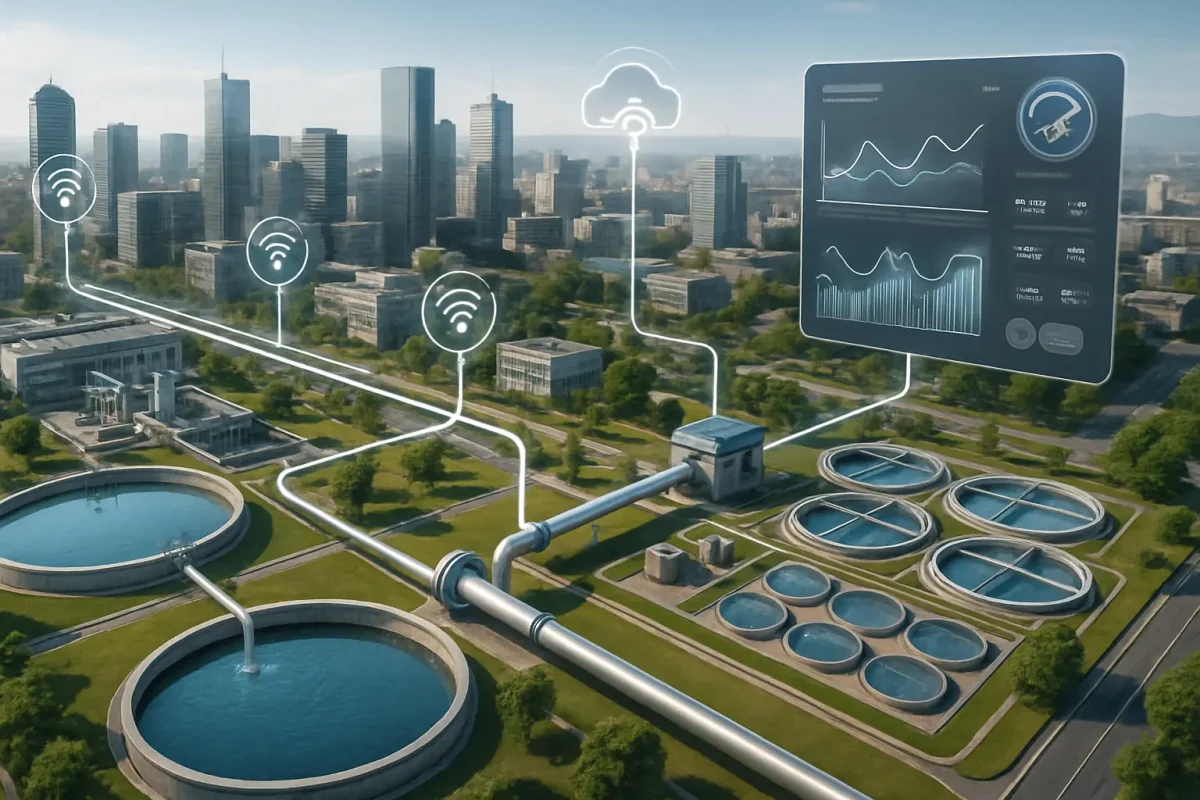
Smart Water Management Systems are becoming a foundational component of smart city infrastructure.
Cities increasingly require integrated platforms capable of managing:
- Water distribution
- Water quality
- Wastewater systems
- Energy usage
- Environmental monitoring
An IoT Based Smart Water Management System provides the connectivity and intelligence needed to support these initiatives.
Municipal authorities are also deploying IoT Based Water Management System for Smart Cities to reduce water losses, improve service delivery, and support long-term sustainability goals.
Benefits include:
- Improved urban resource management
- Enhanced public services
- Reduced operational costs
- Better infrastructure planning
- Increased sustainability
Applications of Smart Water Management Systems
Smart Water Management Systems are widely used in:
Municipal Water Networks
Monitor distribution systems, reduce water losses, and improve service reliability.
Drinking Water Systems
Support continuous quality monitoring and compliance management.
Water Treatment Plants
Optimize treatment processes and improve operational efficiency.
RO Plants
Monitor filtration performance and product water quality.
Industrial Facilities
Track water usage, wastewater quality, and equipment performance.
Commercial Buildings
Detect leaks and reduce utility costs.
Agriculture and Irrigation
Improve water efficiency and resource management.
Frequently Asked Questions
Key benefits include real-time monitoring, leak detection, improved water quality management, reduced operating costs, energy efficiency, regulatory compliance, and sustainability improvements.
IoT enables continuous monitoring, automated alerts, cloud-based analytics, remote access, and data-driven decision-making.
Yes. By monitoring flow, pressure, and consumption patterns, these systems can quickly identify leaks and abnormal conditions.
Yes. Industries use these systems for water quality monitoring, wastewater management, process optimization, and regulatory compliance.
Yes. They can monitor pressure, flow, conductivity, membrane performance, and product water quality in real time.
