
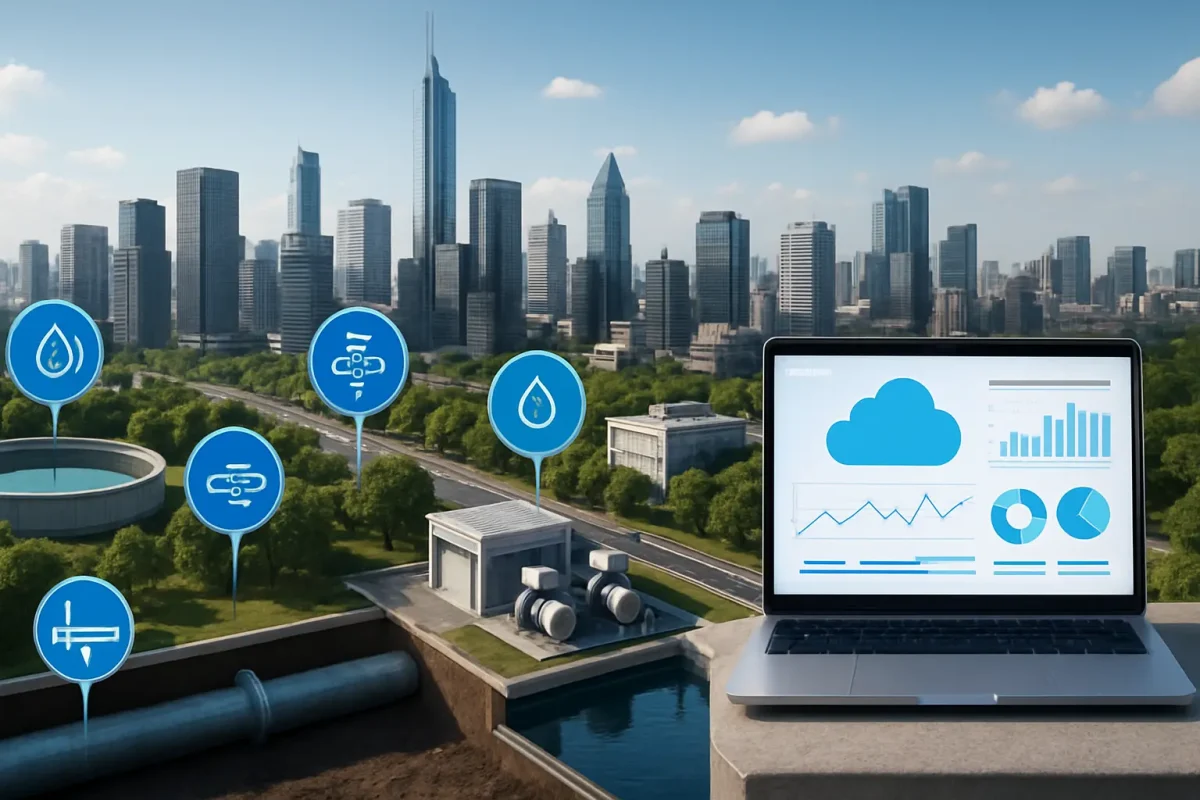
Urban populations are growing rapidly, placing increasing pressure on water infrastructure, utility services, and environmental resources. Municipalities worldwide face significant challenges including water scarcity, aging infrastructure, non-revenue water losses, rising operational costs, and increasing regulatory requirements.
Traditional water management approaches often rely on manual inspections, fragmented monitoring systems, and reactive maintenance practices. These limitations make it difficult for city authorities to maintain efficient and sustainable water services.
An IoT Based Water Management System for Smart Cities addresses these challenges by integrating connected sensors, communication networks, cloud platforms, and advanced analytics into a centralized monitoring ecosystem. These systems provide real-time visibility into water quality, water distribution, leakage events, consumption patterns, reservoir levels, and infrastructure performance.
As cities continue their digital transformation journey, intelligent water management is becoming a fundamental component of smart urban infrastructure.
Organizations exploring urban water modernization strategies should first understand the foundations of a Smart Water Management System and the operational benefits highlighted in our guide on Advantages of Smart Water Management System. Cities implementing connected infrastructure can further leverage the capabilities discussed in IoT Based Smart Water Management System to create more resilient and sustainable water networks.
What Is an IoT Based Water Management System for Smart Cities?
An IoT Based Water Management System for Smart Cities is a connected digital platform that continuously monitors, analyzes, and optimizes urban water infrastructure using intelligent sensors, communication networks, cloud computing, and real-time analytics.
The system collects operational data from:
- Water treatment plants
- Water distribution networks
- Storage reservoirs
- Elevated water tanks
- Pumping stations
- Water quality monitoring stations
- Consumer water meters
- Leakage monitoring devices
This data is transmitted to centralized monitoring platforms where city operators can visualize performance, detect abnormalities, generate reports, and respond proactively to operational issues.
The result is a more efficient, transparent, and sustainable urban water management ecosystem.
Why Smart Cities Need Intelligent Water Management
Modern cities face several water-related challenges:
Water Losses
Many cities lose significant amounts of treated water due to pipeline leakage and infrastructure failures.
Aging Infrastructure
Old pipelines and water facilities require continuous monitoring to prevent failures.
Increasing Water Demand
Growing populations place additional stress on existing water resources.
Water Quality Risks
Contamination events can impact public health and regulatory compliance.
Rising Operational Costs
Utilities must reduce costs while maintaining service reliability.
An IoT-enabled approach helps municipalities address these challenges through real-time monitoring, predictive analytics, and automated decision-making.
Global organizations such as the UN-Water Initiative emphasize the importance of sustainable water management and digital innovation in addressing future water challenges.
Core Components of an IoT Based Water Management System
A successful smart city water platform consists of several integrated technologies.
Smart Sensors
Sensors continuously collect operational data from the field.
Common devices include:
- Flow meters
- Pressure sensors
- Ultrasonic level sensors
- pH sensors
- Conductivity sensors
- Turbidity sensors
- Chlorine analyzers
- Energy meters
Many municipalities deploy Smart Sensors for Real-Time Water Quality Monitoring to improve operational visibility and measurement accuracy.
IoT Gateway
The gateway aggregates sensor data and securely transmits information to cloud servers.
Functions include:
- Data acquisition
- Protocol conversion
- Edge processing
- Data buffering
- Secure communication
Communication Infrastructure
Data can be transmitted using:
- LoRaWAN
- NB-IoT
- Cellular networks
- Ethernet
- Fiber optics
- Radio telemetry
Cloud Monitoring Platform
Cloud software enables:
- Real-time dashboards
- Alarm notifications
- Historical data storage
- Trend analysis
- Report generation
Analytics Engine
Advanced analytics provide actionable insights into:
- Water losses
- Consumption trends
- Infrastructure performance
- Asset utilization
- Predictive maintenance requirements
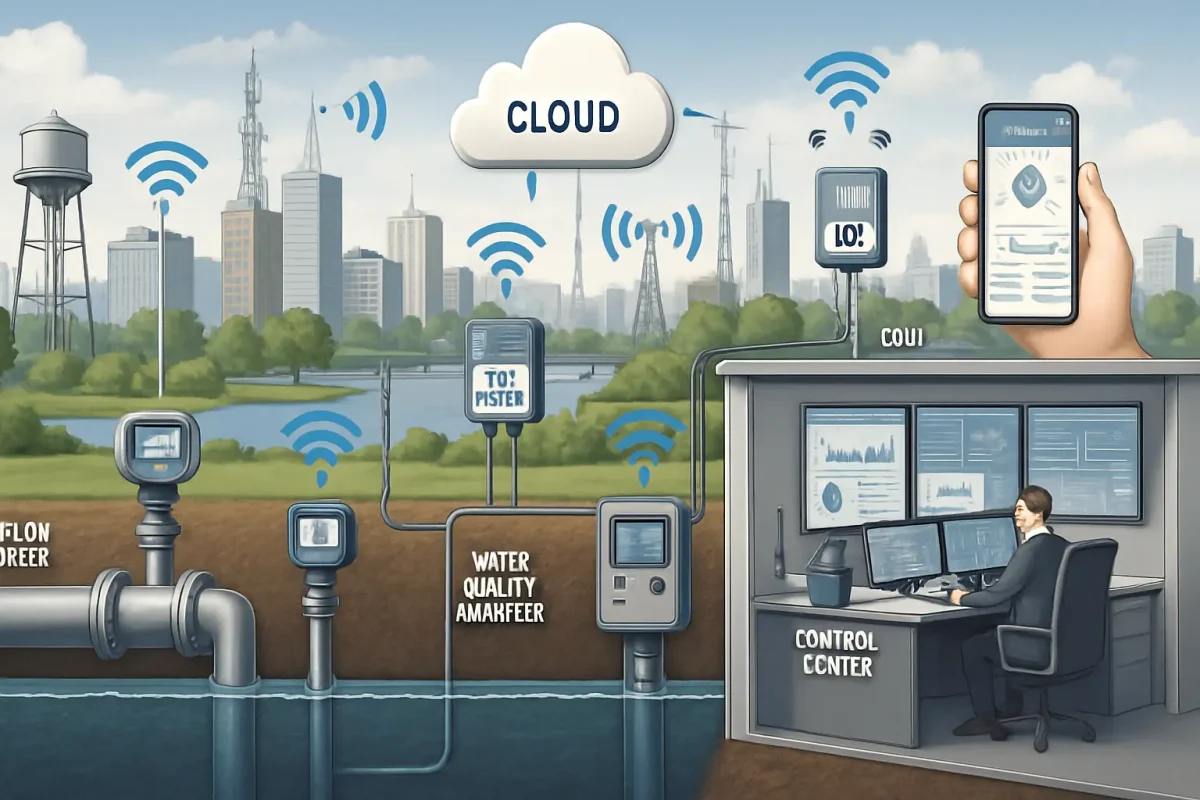
Real-Time Water Quality Monitoring Across Smart Cities
Water quality management is one of the most critical responsibilities of urban utilities.
Traditional laboratory sampling methods provide limited visibility because measurements are only available at specific intervals.
An IoT-enabled monitoring platform provides continuous visibility into critical water quality parameters.
Parameters Monitored
- pH
- ORP
- Conductivity
- TDS
- Turbidity
- Dissolved Oxygen
- Residual Chlorine
- Temperature
Cities implementing an IoT Water Quality Monitoring System gain access to real-time water quality information from multiple locations across the distribution network.
Municipal operators can also leverage Water Quality Monitoring Using IoT solutions to automate data collection, alarm generation, and compliance reporting.
Similarly, a comprehensive Water Quality Monitoring System Using IoT helps reduce manual testing requirements while improving operational response times.
Municipal drinking water programs increasingly rely on Drinking Water Quality Monitoring initiatives to ensure safe water supplies. This approach is particularly relevant for emerging urban centers implementing Drinking Water Quality Monitoring in Pakistan and Drinking Water Quality Monitoring in Islamabad.
According to the World Health Organization (WHO) Drinking Water Guidelines, continuous monitoring plays a critical role in protecting public health and ensuring safe drinking water supplies.
Benefits of Real-Time Water Quality Monitoring
- Early contamination detection
- Improved public safety
- Faster incident response
- Better compliance management
- Reduced manual testing costs
- Enhanced operational visibility
Smart Water Distribution Network Monitoring
Water distribution networks form the backbone of urban water infrastructure.
Managing these networks effectively requires continuous monitoring of operational conditions.
Parameters Monitored
- Flow rates
- Pipeline pressure
- Reservoir levels
- Tank levels
- Pump operation
- Consumption patterns
- Valve status
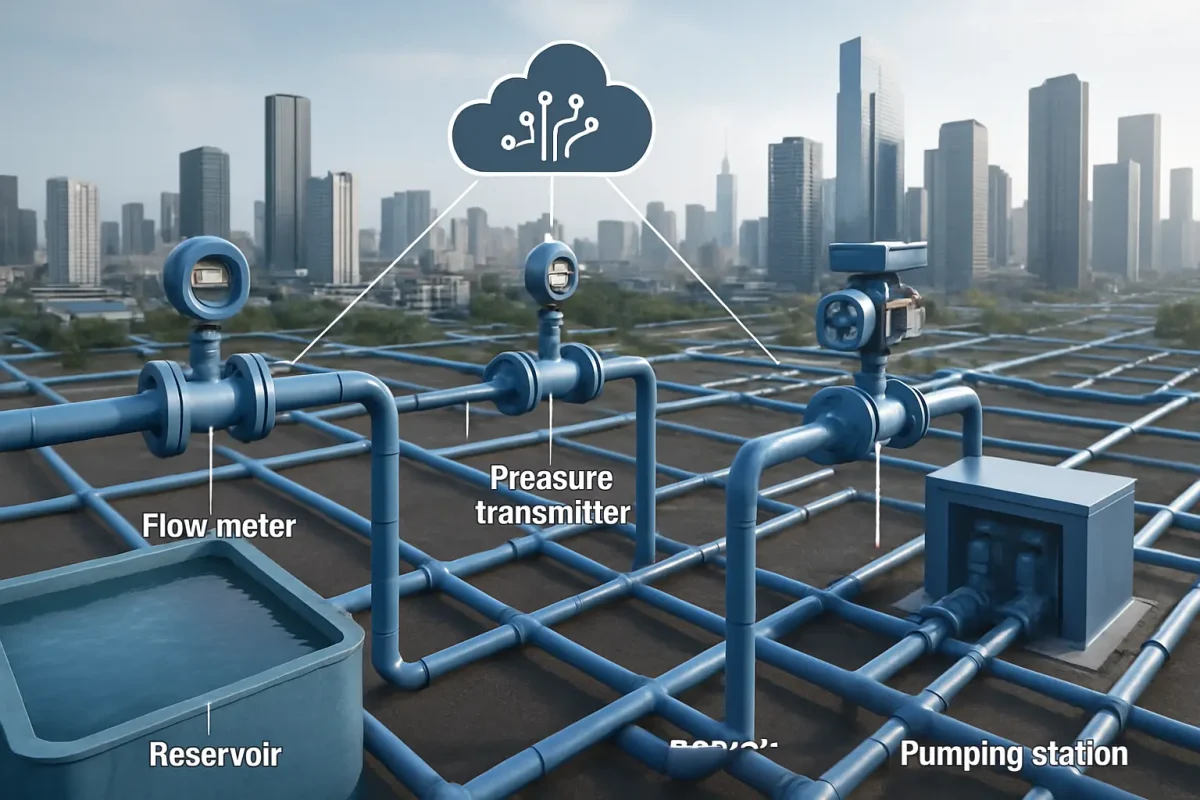
IoT systems provide city operators with a complete view of network performance from a centralized dashboard.
Real-time monitoring enables:
- Faster fault detection
- Improved pressure management
- Better resource allocation
- Reduced operational costs
- Improved service reliability
These capabilities form the foundation of modern Industrial Water Monitoring System deployments and large-scale municipal water management projects.
Leakage Detection and Non-Revenue Water Reduction
Water leakage remains one of the most significant challenges faced by municipalities worldwide.
Undetected leaks result in:
- Water losses
- Increased operating costs
- Infrastructure damage
- Reduced service reliability
Smart cities increasingly deploy Water Leakage Detection Systems to identify hidden leaks before major losses occur.
Advanced Pipeline Leakage Detection Systems for Water continuously analyze flow and pressure patterns to detect anomalies.
Modern IoT-Based Water Leakage Detection technologies further improve detection accuracy through real-time monitoring and automated alerting.
Many municipalities implement Leakage Detection in Water Distribution Systems as part of broader smart city modernization initiatives.
The International Water Association (IWA) identifies non-revenue water reduction as one of the most important priorities for modern utilities seeking operational efficiency and sustainability.
Benefits of Smart Leak Detection
- Reduced water losses
- Lower operating costs
- Improved infrastructure reliability
- Faster repair response
- Better resource conservation
Smart Water Metering and Consumer Analytics
Smart water metering is one of the most impactful applications of IoT technology in modern cities.
Traditional water meters often require manual readings, which can be time-consuming, costly, and prone to human error.
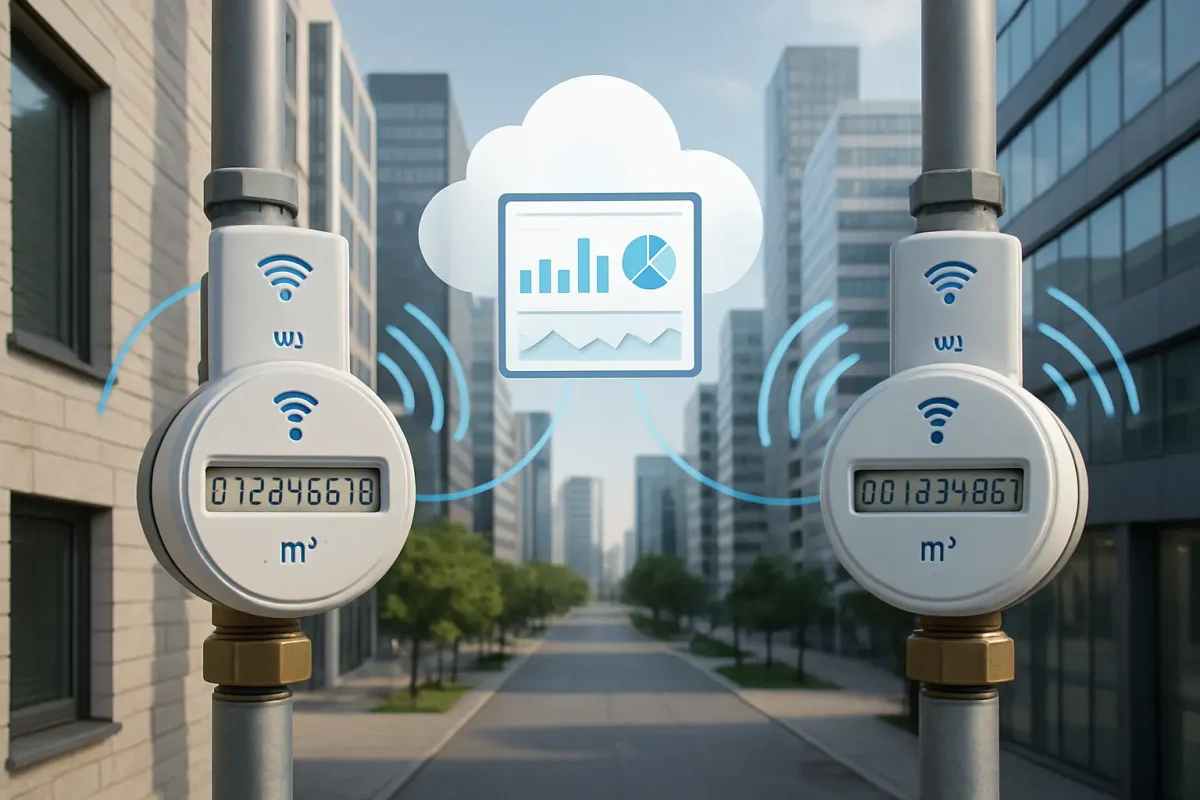
IoT-enabled smart meters automatically transmit consumption data to centralized monitoring systems in real time.
Benefits of Smart Water Metering
- Automated meter reading
- Accurate billing
- Reduced operational costs
- Detection of abnormal consumption
- Improved customer engagement
- Better demand forecasting
Smart metering also allows municipalities to identify unusual consumption patterns that may indicate leaks, unauthorized usage, or infrastructure issues.
By integrating smart metering into an IoT Based Smart Water Management System, city authorities gain deeper insights into consumption behavior and resource utilization.
Predictive Maintenance and Asset Management
A major challenge for municipalities is maintaining extensive water infrastructure while minimizing downtime and repair costs.
Traditional maintenance approaches are often reactive, meaning equipment is serviced only after a failure occurs.
An IoT Based Water Management System enables predictive maintenance by continuously monitoring asset performance.
Assets Commonly Monitored
- Pumps
- Motors
- Booster stations
- Treatment equipment
- Reservoir systems
- Pressure regulating valves
- Flow control devices
The system analyzes operational data such as:
- Runtime hours
- Energy consumption
- Pressure trends
- Flow performance
- Equipment efficiency
This information helps operators identify potential issues before failures occur.
Predictive maintenance reduces emergency repairs, extends equipment lifespan, and improves service reliability.
These capabilities complement the benefits discussed in Advantages of Smart Water Management System, where proactive monitoring plays a key role in reducing operational costs and improving infrastructure performance.
Smart Reservoir and Tank Level Monitoring
Storage reservoirs and elevated tanks are critical components of urban water infrastructure.
Maintaining optimal water levels is essential for ensuring continuous service and preventing overflow or shortages.
IoT-enabled level monitoring systems provide real-time visibility into:
- Reservoir levels
- Elevated tank levels
- Ground storage tanks
- Pump station performance
- Water availability
Benefits
- Improved supply reliability
- Reduced overflow incidents
- Better resource planning
- Enhanced operational efficiency
- Optimized pumping schedules
The integration of tank monitoring systems with broader Smart Water Management System platforms provides a complete view of urban water resources.
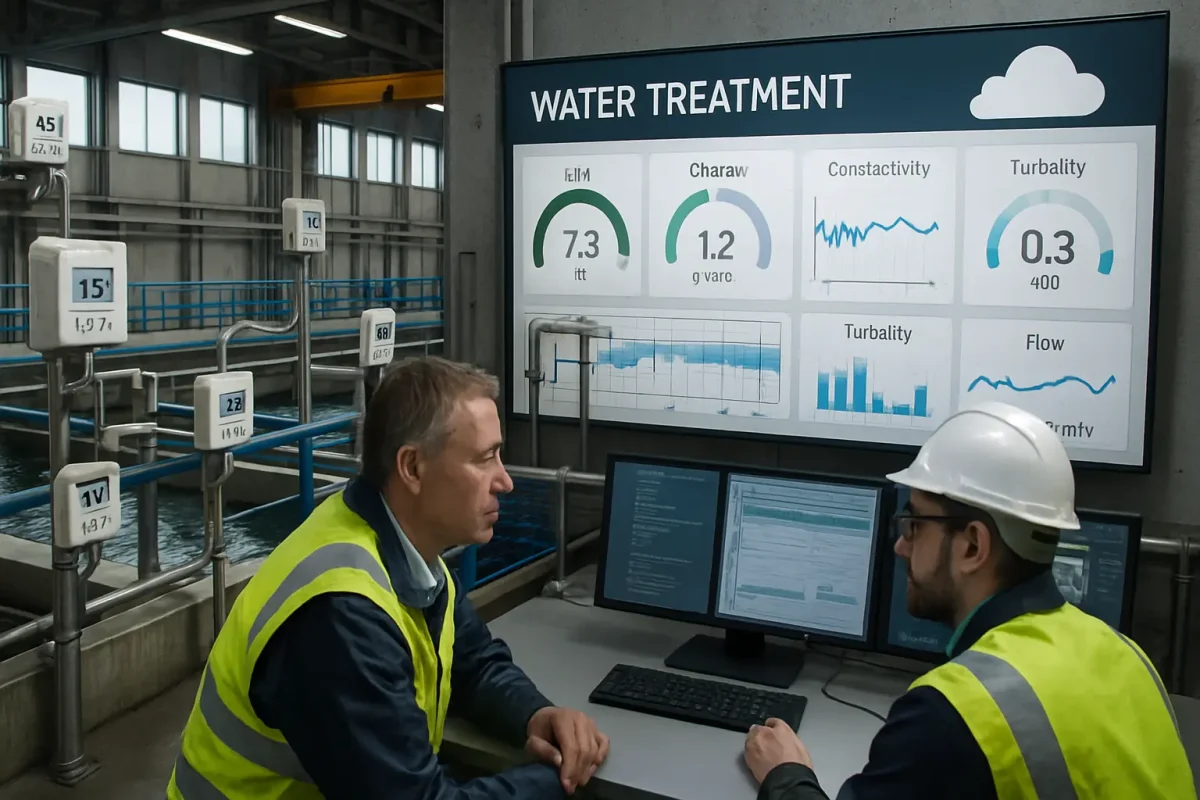
Water Treatment Plant Integration
Water treatment facilities play a critical role in ensuring safe and reliable water supplies.
An IoT Based Water Management System allows municipalities to monitor treatment operations continuously.
Treatment Parameters Monitored
- pH
- Turbidity
- Conductivity
- Chlorine levels
- Dissolved oxygen
- Flow rates
- Chemical dosing systems
- Equipment performance
Organizations implementing Smart Water Treatment Solutions can use IoT technologies to improve treatment efficiency, reduce chemical consumption, and strengthen compliance management.
Similarly, IoT Solutions for Water Treatment Plants provide operators with centralized dashboards, automated reporting, and remote monitoring capabilities.
These technologies support the broader trend of Digital Transformation in Water Treatment, where connected infrastructure enables more intelligent and efficient operations.
Sustainability and Environmental Benefits
Sustainability is one of the primary goals of smart city initiatives.
Water utilities are under increasing pressure to reduce resource consumption while maintaining reliable services.
An IoT Based Water Management System contributes to sustainability through:
Reduced Water Losses
Leak detection minimizes wastage and conserves valuable resources.
Improved Energy Efficiency
Optimized pump operation reduces electricity consumption.
Better Resource Allocation
Real-time data supports informed decision-making.
Reduced Carbon Footprint
Efficient operations lower environmental impact.
These objectives align closely with the mission of UN-Water and global sustainability initiatives focused on responsible water management.
Smart water technologies also support United Nations Sustainable Development Goal 6 (Clean Water and Sanitation), which promotes sustainable access to safe water worldwide.
Smart Cities and Digital Water Transformation
Cities worldwide are investing heavily in digital infrastructure.
Water utilities are increasingly adopting connected technologies to improve operational efficiency and public service delivery.
An IoT Based Water Management System forms a critical component of the smart city ecosystem by enabling:
- Data-driven decision making
- Automated monitoring
- Infrastructure optimization
- Improved customer service
- Sustainable resource management
The International Telecommunication Union (ITU) Smart Sustainable Cities Initiative highlights the importance of intelligent infrastructure in supporting future urban development.
As smart city programs continue to expand, connected water systems will become increasingly important for ensuring resilient and sustainable urban environments.
Economic Benefits and Return on Investment (ROI)
Municipalities often evaluate technology investments based on measurable financial returns.
An IoT Based Water Management System delivers value through:
Reduced Non-Revenue Water
Early leak detection reduces water losses.
Lower Maintenance Costs
Predictive maintenance minimizes emergency repairs.
Reduced Labor Costs
Remote monitoring decreases manual inspections.
Improved Asset Utilization
Data-driven management improves equipment efficiency.
Reduced Energy Consumption
Optimized operations lower electricity expenses.
Many cities achieve substantial long-term savings while simultaneously improving service quality and sustainability performance.
The World Bank Water Program recognizes digital water technologies as important tools for improving water resource management and infrastructure efficiency.
Future Trends in Smart City Water Management
The future of urban water management will increasingly incorporate advanced technologies such as:
Artificial Intelligence (AI)
AI-powered analytics will improve forecasting and operational optimization.
Digital Twins
Virtual models of water infrastructure will support planning and simulation.
Edge Computing
Local processing will improve response times and reduce network dependency.
Advanced Analytics
Machine learning will enhance leak detection and predictive maintenance.
Autonomous Infrastructure
Future systems will automatically adjust operations based on real-time conditions.
These innovations will further strengthen the capabilities of smart city water management systems and improve urban sustainability.
Frequently Asked Questions (FAQ)
It is a connected platform that uses IoT sensors, communication networks, cloud software, and analytics to monitor and optimize urban water infrastructure in real time.
IoT enables real-time monitoring of water quality, flow rates, pressure, tank levels, leakage events, and infrastructure performance, helping cities improve efficiency and reduce costs.
Yes. IoT-enabled leak detection systems continuously analyze flow and pressure data to identify abnormal conditions and generate alerts.
Common parameters include pH, conductivity, turbidity, chlorine, dissolved oxygen, ORP, TDS, and temperature.
They help reduce water losses, improve energy efficiency, support environmental goals, and enhance long-term resource management.
